| SEA guidelines for the evaluation of strategy papers in development co-operation. (Marianne Fernagut) |
| home | list theses | contence | previous | next |
1.1 SEA objectives and benefits
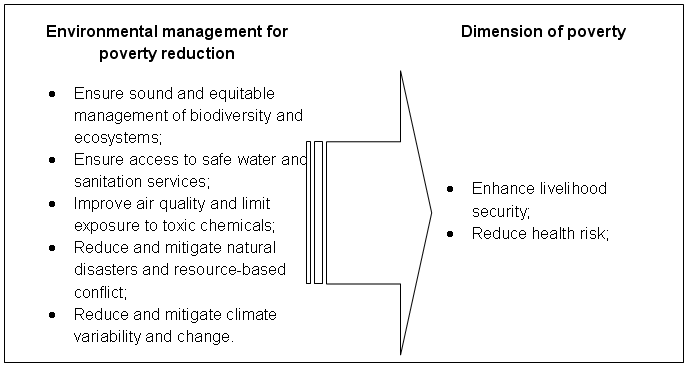
There are many links between the environment and poverty. An understanding of some of the ways that environmental issues affect poor people can help in determining how aid can be used more effectively to address poverty. Figure 1 addresses this issue. It provides five key ways between environmental conditions and dimensions of poverty. In reality these linkages are between poverty and environment are dynamic and (often) interconnected.
In order to forge a broad-based and more co-ordinated response to poverty-environment challenges and to achieve synergy between diverse interventions across many sectors and levels of action poverty-environment issues need to be integrated into mainstream development planning (Dfid et al., 2002). Strategic environmental assessment (SEA) is a tool to integrate environmental issues into policies, plans and programmes.
Figure 1: Environmental conditions and poverty dimensions (Dfid et al., 2002).
There is not one generally accepted definition of SEA. It can be described as:
“SEA is a systematic process for evaluating the environmental consequences of proposed policy, plan or programme initiatives in order to ensure they are fully included and appropriately addressed at the earliest appropriate stage of decision-making on par with economic and social considerations” (Sadler and Verheem, 1996).
There is a burgeoning interest in SEA. Countries world-wide are establishing procedures for s SEA (Carrati, P. et al., 2004). The use of SEA is supported by the principle of sustainable development to realise environmental, social and economic integration, a fundamental objective of sustainable development[1]. Moreover, SEA allows for an integrated and balanced decision-making. SEA enables decision-makers to develop policies and strategies that are based on a sound analysis and understanding of their sustainable and environmental implications. Benefits in practice include better commitment of civil society for policies and plans, insight in potentially better alternatives and the avoidance of unnecessary mistakes or environmental blockades for sustainable and economic growth.
By being proactive, decision-makers can avoid the costs and missed opportunities that are too often associated with inadequate information and limited choices. When applied as a flexible, consultative, transparent and iterative process, SEA helps to identify the best practicable options for achieving positive outcomes and minimising adverse effects in accordance with sustainable principles (Dalal-Clayton and Sadler, 2003).
SEA responds to the frequently mentioned criticism that project-level EIA occurs after questions related to whether, where and what type of development should take place. They have either been decided or largely pre-empted, based on prior analyses that did not account for environmental concerns. SEA introduces environmental considerations into decision-making early, before project location and scale decisions have been made. SEA allows decision-makers to focus on the effects of strategic choices, before specific projects are considered. Thus compared to a project-level EIA, SEA can consider a broader range of alternative proposals and mitigation measures.
This approach also allows for systematic consideration of cumulative and broad scale (i.e. regional and global) environmental effects. EIA typically does not focus on the combined effect of multiple projects in a region or river basin.
SEA provides a mechanism to incorporate considerations related to environmental issues into decision-making. SEA can draw attention to potential environmental problems early so that decision makers can filter out environmentally damaging projects that might otherwise be the source of costly and protracted delays and controversy (Asian Development Bank, 2003). Box 1 summarises the main benefits of SEA.
SEA can improve the quality of other analyses of the country strategy papers of the development agency. SEA increases the potential of the donor country support to contribute to reducing poverty and stopping the destruction of the environment, while aiming at long-term sustainable economic and democratic development.
|
Box 1: Benefits of SEA (adapted from Donelly et al., 1998).
SEA can lead to less mistakes and cheaper options because SEA: - Promotes integrated environment and development decision-making; - Provides for consideration of a larger range of alternatives than is normally possible in project EA; - Enhances institutional efficiency (particularly where EIA related skills, operational funds and institutional capacities are limited) by obviating the need for unnecessary project-level EIAs;
SEA can result in better lives for our children (long term) and sustainable economic growth because SEA: - Facilitates the design of environmentally-sustainable policies and plans; - Takes account, where possible, of cumulative effects (particularly by focussing on the consequences of sector or regional-level developments) and global change;
SEA can increase awareness on depletion of natural resources because SEA: - Strengthens and streamlines project environmental assessment by: - The incorporation of environmental goals and principles into policies, plans and programmes that shape individual projects; - Prior identification of environmental goals and principles into policies, plans and programmes that shape individual projects; - Clearance of strategic issues and information requirements;
SEA can result in credible policies supported by civil society because SEA: - Provides a mechanism for public engagement in discussions relevant to sustainability at a strategic level.
|
1.2 SEA context: legislation and policy framework
Although there is no legislation for SEA in development co-operation in Federal Belgium, several policy declarations exist. The existing SEA legislation and policy framework – whether explicitly referring to development co-operation or not, can serve as a framework for development co-operation. Table 1 presents a summary of the existing legislation on SEA and development co-operation in Belgium and the European Union.
It is ethical and logical that policies, plans and programmes in this area with possible environmental consequences for the partner countries are (at least) assessed on environmental impacts, just like policies, plans and programmes in Belgium. Moreover the law of the 25th of May 1999 concerning Belgian international co-operation explicitly states that “environment” is one of the three included issues that has to be taken into account in the five sectors in which the Belgian development co-operation is active.
Twenty-five EU member states are adopting the European SEA Directive (2001/42/EC) in their national legislation. This Directive applies to specified plans and programmes (e.g. for agriculture, forestry, energy, industry, waste management and land use) that set the framework for projects subject to EIA. It is modelled on the EIA Directive (97/11/EC) and applies a number of procedural elements from that framework. Key requirements include the preparation of an environmental report, the information to be included in the statement, consideration of alternatives, arrangements for public participation and factors to be considered in decision-making.
The SEA Directive will have Europe-wide impact and international ramifications. First, current EU candidate member states (Bulgaria, Rumania) and possibly some new independent states (Ukraine, Moldavia,..) can be expected to introduce SEA arrangements that are aligned directly with the EU framework. Second, the provisions of the Directive have had a major influence on the negotiation of the SEA Protocol[2] to the UNECE Convention on SEA[3], as currently agreed. Third, the Directive and the Protocol may bear on international aid and financing activities undertaken by bilateral and multilateral donors (Sadler, 2001). Also many developing countries regard the Directive as a useful model for potential regulation on SEA in their region (‘what is good enough for Europe is good enough for us’).
Under the impulse of this EU directive and the Aarhus Convention[4] the SEA decree[5] was established in Flanders. Chapter II of this decree is about environmental assessment of plans and programmes. The definition of plans and programmes in this decree does not explicit at development co-operation plans and programmes. But there is no indication that development co-operation should not subjected to the decree.
Likewise, the Brussels region has transposed the EU directive on 18 March 2004 in the ordinance related to the assessment of the environmental impact of certain plans and programmes. By July 2004 the Walloon Region and the federal government still are working on a regulation concerning SEA (Hens, 2003).
Besides from a legislative perspective, also the existing policy framework induces the use of SEA. Table 2 outlines the policy framework for SEA in development co-operation.
In 1983, the UN set up the World Commission on Environment and Development[6] (WCED). It was here that the concept of sustainable development ‘which meets the needs of the present without compromising the ability of future generation to meet their own needs’ was proposed as an alternative to continuous economic growth (WCED, 1987).
Belgium has ratified a number of Multilateral Environmental Agreements[7] (MEAs). They commit Belgium to observing environmental agreements at home, but also to help developing countries meet their own commitments. The targets set in these agreements are important for reducing vulnerability of the poor and meeting the challenges of development (Dfid, 2003).
In 1992, Belgium signed the Declaration of Rio and accepted Agenda 21, in which it was clearly stated that sustainable development and economic growth should in the long term be linked to the protection of the environment, and certain principles were laid down.
In 1996 the European Union accepted a resolution[8] concerning environmental assessment in development co-operation that recognises the need to expand environmental assessment procedures to cover not only projects but also development policies (e.g. Strategic Environmental Assessment for programmes to support national planning and policies, Structural Adjustment Programmes, Sector Investment Programmes) (EU, 1996). In the same year the Belgian council of ministers decided to establish a procedure to assess decisions concerning development projects with respect to the environment.
The new EU-ACP agreement signed the 23rd of June 2000 in Cotonou (Benin) draws attention to the promotion of environment and natural resources as a crosscutting-theme in co-operation[9].
At the World Summit on Sustainable Development in Johannesburg 2002, a political declaration was signed and an agreement was reached about the Plan of Implementation. This document stressed the integration of the three pillars of sustainable development and the importance of a holistic and intersectoral approach to reach the most important economic, social and ecological objectives. SEA is a tool to support this integrative approach.
Finally, in his policy letter about development co-operation, the Belgian Minister of Development Co-operation, Marc Verwilghen - declared to have the Millennium Development Goals[10] from the UN Millennium Development Declaration (UN, 2000) as a guidance and touchstone for development co-operation (Belgische Kamer van Volksvertegenwoordigers, 2003). Also, Ludo Sannen, Flemish Minister of Environment, Agriculture and Development Co-operation at that time, drew attention in his policy letter to international engagements like meeting the Millennium Development Goals among which Goal 7: Ensure environmental sustainability (Sannen, 2002).
Table 1: Summary of legislative framework with regard to SEA / environment and development co-operation in Belgium and the EU.
|
Reference |
Applicable to |
Date |
Relevance |
|
Law of 25 May 1999 concerning the Belgian Development Co-operation |
Belgium |
1999 |
Environment as a sector crossing action domain for the Belgian Development Co-operation. |
|
Directive 2001/42/EG On the assessment of the effects of certain plans and programmes on the environment |
European Union |
2001 |
European Guideline for plans and programmes. Key requirements are the preparation of an environmental report, which does not only contain information, but also different alternatives, that are considered, agreements about public consultation and decision-making. |
|
BS 13/02/2003 Decree of the Flemish Community completing the 5th of April 1995 Decree on environmental policy with a title on Environmental Impact and Risk assessment. |
Flanders |
2003 |
Chapter II: environmental impact assessment of plans and programmes. This gives a framework with regard to the application area, the information notice, the draw up and the research and the use of what is called a ‘plan-EIA’. |
|
BS 18/03/2004 Ordinance related to the evaluation of environmental impact of certain plans et programmes |
Brussels-Capital Region |
2004 |
Transposition of the Directive 2001/24/EC - Assure at high level the protection of the environment; - Contribute to the integration of environmental consideration in the implementation of plans and programmes; in order to promote sustainable development by submitting certain plans and programmes to environmental assessment. |
|
UN Aarhus Convention on Access to Information, Public Participation in Decision-Making and Access to Justice in Environmental Matters |
Contracted parties (entered into force on the 30th of October 2003) |
2003 |
The right of everyone to receive environmental information that is held by public authorities. The right to participate from an early stage in environmental decision-making. The right to challenge, in a court of law, public decisions that have been made without respecting the two aforementioned rights or environmental law in general. |
|
UN SEA protocol (supplement of the UN convention on environmental impact in include context) |
Contracting parties (Signed by Belgium on the 21th of May 2003, but not yet applicable) |
? |
Requires its Parties to evaluate the environmental consequences of their official draft plans and programmes. The protocol addresses policy and legislation but the implementation of SEA is not compulsory. It also provides for extensive public participation in government decision-making in numerous development sectors from land use planning to transport, from agriculture to industry, from oil refineries to ski lifts with specific attention for human health. |
|
/ |
Brussels Region, Belgium |
2004 |
No legislation on SEA exists. |
Table 2: Summary of the policy framework with regard to SEA / environment and development co-operation.
|
Reference |
Application |
Date |
Relevance |
|
Multilateral Environmental Agreements[11] |
Contracting parties |
/ |
Help developing countries to meet their own commitments. |
|
World Commission on Environmental and Development Report ‘Our Common Future’ |
World |
1987 |
Concept of sustainable development as that ‘ which meets the needs of the present without compromising the ability of future generations to meet their own needs’. |
|
Declaration of Rio about Environment and Development (and Agenda 21) |
World |
1992 |
The Rio Declaration states that the only way to have long-term economic progress is to link it with environmental protection. This will only happen if nations establish a new and equitable global partnership involving governments, their people and key sectors of societies. |
|
Council of Ministers May 1996 and July 1996 |
Belgium |
1996 |
Decision to establish a procedure to assess the environmental impact of development co-operation projects supported by the Belgian government. |
|
Council Resolution of 28 May 1996 concerning environmental impact assessment in development Co-operation |
EU |
1996 |
Recognition of the need to expand environmental assessment on procedures to cover not only projects but also development policy, plans and programmes (e.g. SEA). |
|
EU-ACP agreement (Cotonou Agreement) |
EU – ACP countries |
2000 |
Environment as thematic and cross-cutting issue: co-operation on environmental protection and sustainable utilisation and management of natural resources. |
|
Political declaration of Johannesburg about sustainable development and the implementation plan |
Contracting parties |
2002 |
Responsibility to consolidate and reinforce the pillars of sustainability at local, regional, national and global level, public participation included. |
|
Policy letter Development Co-operation 2003 |
Flanders |
2003 |
Attention to international engagements (MDG), amongst which is respect for the environment. |
|
General Policy letter of the Minister for development co-operation year of account 2004. |
Belgium |
2003 |
MDG as guidance and touchstone for development co-operation policy. |
1.3 SEA process
Several action steps can be distinguished in a good practice SEA-process. Figure 2 illustrates the steps in the course of an SEA and decision-making process. An environmentally sound strategy is the results of the interaction between the dialogue between stakeholders and initiator and objective expert knowledge whereby different stages can be distinguished. A review team and transparency during the whole process must guarantee the quality (see also paragraph 2.1).
Two principles should be borne in mind throughout the process.
- SEA will differ a great deal from one country strategy to another. It depends on the size, focus and specific assumptions of the bilateral co-operation of a development agency with each country. Each country has its specific capacity, context and national strategies.
- SEA should always be based (as much as possible) on existing written material of the country strategy paper (Sida, 2002).
In addition to the concertation and the SEA-process, in many countries and sectors within these countries – existing planning processes may exist. If so, it is clear that SEA should integrate to these.
Box 2 presents a series of stages that set a scientific process/analyses as input in the public and political debate on the environmental issues and what they mean for strategic planning. In practice these input steps facilitates the planning process. The steps are not strictly distinctive and taken iteratively.
Step 1: Setting objectives and targets (Stocktaking the political environment)
Ideally SEA follows an objective-led approach which means that a set of environmental objectives and targets form the framework against which the predicted environmental impacts are tested. Accordingly, the first step to be carried out under SEA procedure is the stocktaking of the political environment with the aim of setting overall objectives and related targets. International, national or local environmental policy plans from both the development co-operation agency and partner country, can provide a basis for the identification of relevant objectives and targets (in scoping phase). It is crucial to the effectiveness of SEA that the problem definition, vision forming, objective setting and a first reconnaissance of alternatives take place in a public debate. Even in a problem definition people often have different perceptions of what the problem is. In this stage, the initiator may identify who will be involved and which expertise is needed and who will take which responsibilities to ensure the conduct of the SEA (See paragraph 2.1 Roles and responsibilities).
Step 2: Screening
The establishment of a set of environmental objectives and possibly targets represents a precondition for the second step of SEA procedure: screening. Screening stands for the determination of the need for SEA and thus is the step in which SEA is initiated or not. Screening is thus a pre-assessment of the country strategy paper regarding the likelihood of
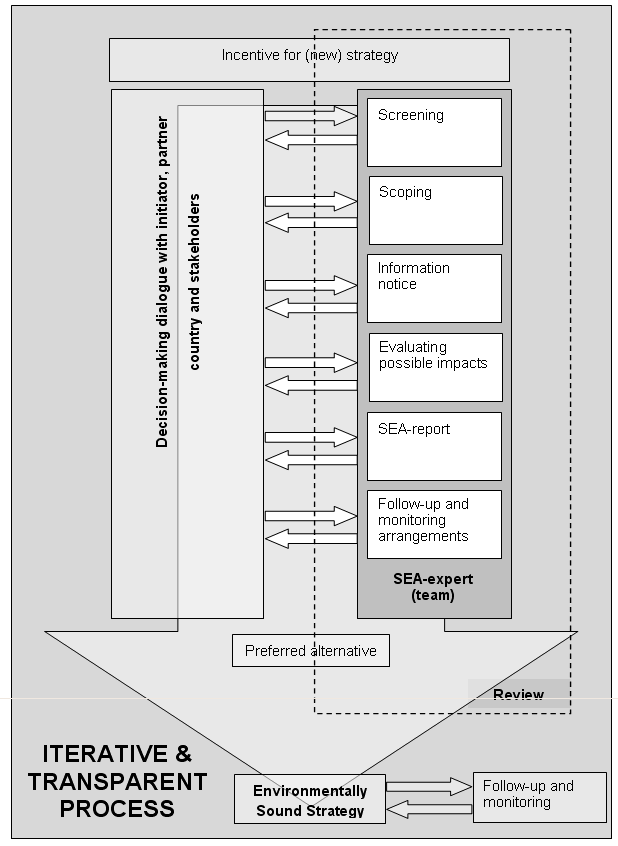
Figure 2: Schematic visualisation of SEA-process
|
Box 2: General input of the SEA procedure (Adapted from Heich, 1998).
1. Setting objectives and targets (Stocktaking of the political environment); 2. Screening to determine the need for SEA at this stage of the planning process; 3. Scoping: - The physical/regional limits; - The impact – problems to be addressed; - The alternative actions that need to be assessed; - Stakeholder involvement; - Writing information Notice. 4. Predicting, evaluating and mitigating impacts: - Measuring/predicting the environmental impact of the action and its alternatives; - Evaluating the significance of the impact (e.g. through comparison with environmental objectives); - Proposing recommendations: preferred alternatives, mitigation and monitoring measures; - Writing SEA-report. 5. Integrating assessment results in final decision-making; 6. Taking the decision (not part of the SEA-procedure); 7. Making arrangements for monitoring and follow-up;
|
certain environmental impacts, which if this likelihood is established leads to the decision that a more detailed assessment, an SEA is necessary (see paragraph 3.1 Screening). It is obvious that without a notion of the environmental framework it would be impossible to judge the necessity of SEA through screening.
Step 3: Scoping
The general purpose of scoping, as the third step of SEA, is to set up the terms of reference for SEA with regard to the physical/regional limits, the impacts to be addressed as well as the alternative actions that need to be assessed (see paragraph 3.2 Scoping). Scoping helps to concentrate the actual efforts to be undertaken under SEA on the most relevant aspects and thereby is a means to also make SEA cost and time effective. Instigation of further environmental assessments at later stages of the planning process (e.g. project level EIA) should also be done. It is important to distinguish the focus of the SEA and what will be decided and assessed at project level. Scoping has to include aspects, which are likely to be
of substantial importance in country strategies. The participation of a broad range of players, including NGOs and relevant authorities can focus the attention and raise the awareness of stakeholders on the potential impact of a policy or programme. On the other hand it brings a broad range of knowledge into the scoping process and ensures its transparency and credibility (See paragraph 2.3 Participation). This phase is concluded with the publication of an information notice (see paragraph 3.3 Content of information notice).
Step 4: Predicting, evaluating and mitigating impacts
On the basis of the findings of the scoping and the corresponding terms of reference for SEA, the implementation of the technical stage can commence. Typically this step starts with the identification and evaluation of relevant environmental impact of the alternatives (see paragraph 3.4 Situation Assessment). The evaluation can either be carried out through a comparison of the impacts with the environmental objectives and targets and/or through comparison of the environmental impacts between the alternatives (see paragraph 4 Environmental issues). The technical assessment concludes with the proposition of recommendations for decsion-making. It includes prevention and mitigation measures, which are envisaged to reduce and, – where possible, offset adverse effects on the environment. The costs and environmental benefits of the proposed mitigation measures are taken into account in the assessment of the environmental impact of an alternative.
Step 5: Integrating assessment results in final decision-making
This step consists of the compilation of the required documentation, which – together with the organised public debate- will serve as the basis for the decision-making by the involved players. It consists in a phased provision of the relevant documents to the players involved in the decision-making process as well as of the recording of the stated feedback.
Finally, the initiator shall be provided with all the necessary documentation including the recorded feedback. A general requirement during the preparation of the final decision and the compilation of the necessary documentation is to strike the balance between a reduction of the complexity of information (aggregation of findings) on the one hand and transparency on the other hand. Adequate communication may require tailor made products. In addition to more scientific reports and summaries, brochures, primers, folders may be needed. Furthermore, constant assistance to the players in the decision-making process through the institution(s), which carried out the SEA (SEA-team), should be available (see paragraph 2.1 Roles and responsibilities).
Step 6: Taking a decision
The subsequent decision should take into account all information acquired and analysed during the SEA. Moreover, the decision-making should be transparent. Accordingly the decision taken should be justified in writing a report prepared by the initiator.
Step 7: Monitoring and follow-up
In order to assess whether or not the predicted environmental effects of plans and programmes are consistent with the actual effect, and to assess to what extent the applied mitigation measures contribute to a reduction of the environmental impacts. It is crucial to make suitable arrangements for monitoring and follow-up to be carried out in the implementation and operation phase. Monitoring and enforcement is not only essential for successful SEA, but equally important for successful policy and plan making.
While undertaking these steps during the SEA-process, there are several principles to consider with respect to SEA. These principles characterise the SEA-process and have implications for the nature of the steps in SEA described above. Appendix C gives an overview of these procedural principles and the questions that they address.
1.4 SEA subjects
The activities within the framework of development co-operation subject to SEA should take place at a level above the project-level and have potential (important) environmental impact.
Box 3 lists recent SEA-studies that provide examples of strategic environmental assessment applied in development co-operation context of donor agencies.
|
Box 3: Recent SEA-studies that provide examples of SEA in developing countries.
SIDA (Sweden): - SEA of Sida-Amhara Regional/rural Development Programme (Ethiopia) Bernt Rydgren, consultant to Sida. 70pages Stockholm (2004);
UNEP: - Integrated Assessment of Trade Liberalization and Trade-Related Policies – A country Study on the Argentina Fisheries Sector by Centro de Estudios Ambientales (CEDEA). 118pages UNEP-Geneva (2002); - Integrated Assessment of Trade Liberalization and Trade-Related Policies – A country Study on the Export Crop Sector in Nigeria by The University of Agriculture 128pages UNEP-Geneva (2002); - Integrated Assessment of Trade Liberalization and Trade-Related Policies – A country Study on the Cotton Sector in China by The Agricultural Economic Research Institute of Nanjing Agricultural University. 66pages UNEP-Geneva (2002).
|
It may not be necessary to subject the complete strategy paper to SEA, more particular in case of the country strategy papers.
Limited institutional and technical capacity of partner governments and the lack of support for SEA in poverty reduction strategies can be critical in having SEA wider applied in development activities (Fernagut and Hens, submitted). Donor agencies can however help in carrying out this assessment. Here too, alignment of procedures and practices will have to be encouraged.
In the debate on aid effectiveness leading to the call for more harmonisation of donor / lender (OECD/DAC, 2003) poverty reduction strategy papers (PRSP) play a role in donor alignment and aid modalities (de Boer, 2004). PRSPs should be comprehensive, results-oriented and promote a sense of ownership amongst those governments that are committed to it. PRSPs may also be subject to SEA. An SEA of the Ghana PRSP has been made.
2 SEA transparency and decision-making
SEA results are assembled in standard documents (a report, manual, guide, memoranda, etc, depending on the audience of the information and the stage in the decision process) and are included in the dossier for decision-making. These documents describe the consideration of environmental risks and opportunities during the development of the strategy paper. The SEA decision-making documents present the results of the SEA in a concise and clear way and offer necessary information to feed the dialogue between decision-makers and between decision-makers and civil society.
Transparency of the planning process is one of the basic principles of SEA. Achieving environmental disclosure, solving problems and ensuring that the country strategy is widely accepted require a transparent decision-making process. The plan or programme must be scrutinised by a range of crosscutting perspectives. A transparent planning process has three objectives:
- To guarantee that environmental matters are taken into consideration in the decision-making process;
- To inform stakeholders[12] about the proposed plan or programme and their environmental consequences;
- To avoid tunnel vision by systematically considering the broader context that is otherwise overlooked.
In the decision-making, two ways of transparency can be distinguished: transparency linked to roles and responsibilities and transparency with respect to the dialogue of the decision-makers and stakeholders concerned with the outcome of the policy, plan or programme and that are not necessarily part of the formal decision-making procedure.
2.1 Roles and responsibilities
In the SEA decision-making process, four parties can be distinguished (Box 4). First, there is the initiator of the SEA. This is the party who initiates the country strategy paper that has to be assessed on environmental impact (partner country[13] together the development co-operation agency).
The second party is the stakeholders and interested and affected groups with respect to the country strategy paper. The information resulting from (each stage in) the SEA-process should feed the dialogue and discussion between all stakeholders and the other decision-makers about which alternative to prefer (see paragraph 2.3).
Thirdly, there is a (team of) expert(s) who draw up the SEA. These experts should be familiar with methods of SEA and have skills in participation, communication and the environmental issues in the partner country[14] (Department of Water Affairs and Forestry, 2001). These SEA-experts can be scientists of local universities, if needed supported by Belgian experts.
|
Box 4: Decision-making parties in SEA-process.
- Parties of the policy dialogue and of the bilateral co-operation process i.e. partner country’s government (or appropriate institution) and donor country’s government or international co-operation institution. - Stakeholders and interested and affected groups and (see paragraph 2.3); - (Team of) SEA-expert(s) assessing (carrying out the SEA on) the donor country’s co-operation policy or the partner country’s development policy; - Independent review committee that advises the (team of) SEA-expert(s).
|
Fourthly, there is an independent review committee of the SEA-process. This committee should be set up to provide a level of overview and advice to the SEA-experts and ensure that the results are objective and transparent. Moreover, the results must also be presented in the most effective and acceptable way, as some issues exposed by the SEA are likely to be controversial. To be successful an SEA requires the commitment of politicians and senior managers to the process.
A review must ensure that:
- There is sufficient interested and affected party involvement[15] (see also paragraph 2.3 Participation);
- There is sufficient information to make a decision, and legislative, administrative and other requirements have been complied with; and
- The SEA was effectively undertaken and that the environmental sustainability requirements are incorporated in the plan or programme.
The review process must be guided by a terms of reference as determined at the beginning if the SEA-process. Therefore, the review committee should be informed from the start about the initiative of a country strategy paper and a companion SEA through an information notice. Early participation of reviewers is also needed to avoid delays in later stage because new issues pop up, that could have been foreseen earlier.
To safeguard the quality of the SEA-process it is critical that the reviewers are independent[16] with respect to the initiator and the SEA-experts undertaking the SEA. Reviewers could include relevant specialists and interested parties (e.g. academics, consultants) of development agency and/or the partner country.
2.2 Decision-making process
Integrating the SEA-process into the planning process requires an in-depth understanding of the decision-making process. To achieve this, it is critical to get the right information (from each SEA phase) to the decision-makers at the right time and to establish where in the whole decision-making process SEA can most optimally be introduced.
SEA should be started when the government assigns the development co-operation agency to work out a particular (country) strategy[17].. That is when (new) objectives of strategic actions for development co-operation strategy need to be identified. However, strategic decisions do not emerge fully-fledged from someone’s brain when he or she is asked. They evolve over time from vague glimmer to final strategy through brainstorming, discussions and negotiations (Therivel, 2004).
In each stage of the decision-making process (starting with problem formulation and aiming at the optimal decision) information provided of the SEA-process should be considered. It is utile to establish a statement of (formal and informal) decisions taken in each SEA-stage for example about the choice of objectives, alternatives considered in SEA, iterative adaptations within the SEA-process, advise of the review committee, etc. The statement of decision indicates how SEA requirements were taken into account in the decision-making process.
The decision-making process with respect to SEA is not an isolated process. The relation of decisions in SEA with other relevant policies, plans and programmes, if applicable are also important. Figure 3 outlines the links between strategy papers and other policy documents in bilateral development co-operation (cfr Belgium). Country strategy papers from side of the donor country, and the national development strategy from the side of the partner country - act as a framework to provide inputs in the policy dialogue in order to set up the indicative co-operation agreement between both parties. The SEA-decisions related to thematic strategy papers, general development policies and government agreements should also be integrated in the statement of decision.
In most partner countries are also several donors active. Figure 4 shows the relation between policies and programmes of partner countries and policies and programmes of different donor countries. Harmonisation of different agenda’s is needed to avoid environmental impacts that could have been foreseen. Decisions made at the donor community level can also influence the outcome of the SEA.
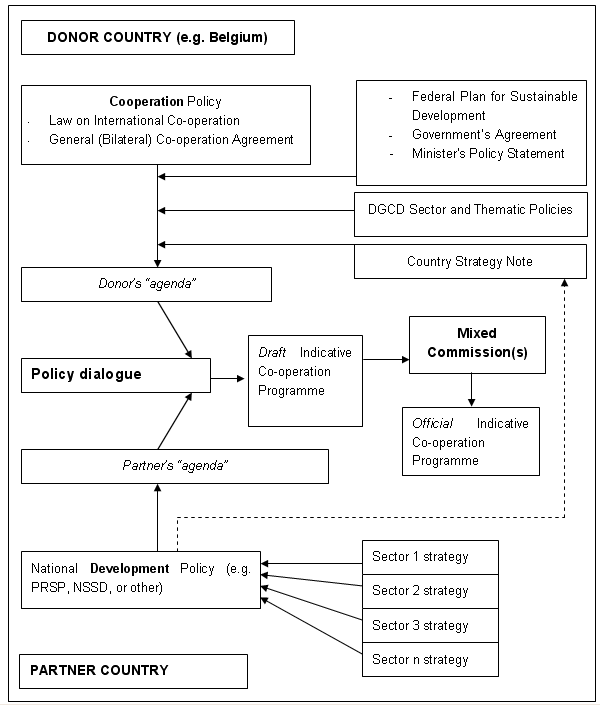
Figure 3: Links between the country strategy papers and other policies, plans and programmes of bilateral development co-operation.
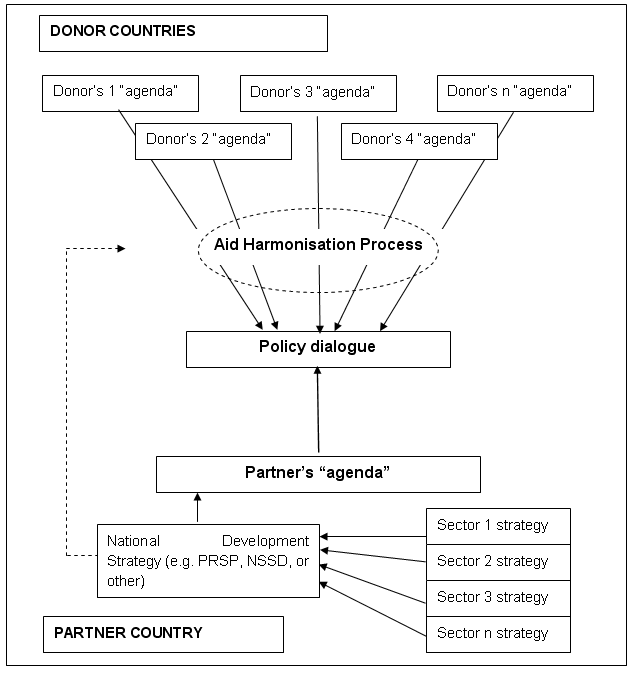
Figure 4: Links between co-operation policies and programmes of donor countries and policies and programmes of the partner country.
2.3 Participation
The external input increases the credibility of SEA and is a prerequisite to guarantee both objectivity and reliability. Moreover it may be needed for the estimation of the social impact of the proposed country strategy paper.
The participation of stakeholders offers numerous opportunities, including (Thérivel and Brown, 1999):
- Allowing third parties to review the authority’s analysis and conclusions;
- Identifying public concerns;
- Soliciting new idea for alternatives and mitigation measures;
- Checking for accuracy;
- Sharing expertise;
- Gaining acceptance for the plan or programme before it is adopted;
- Ensuring that the plan or programme is fully implemented.
Box 5 refers to organisation of participation to assure a transparent SEA-process. A detailed format of the information plan should be set up in the scoping phase (Devuyst, 2000).
|
Box 5: Organisation of participation in SEA (adapted from Aminal, 1997).
1 Analysis of the social characteristics of the country strategy: - Stakeholders of the strategy; - Population groups likely to be affected by or involved in the program (e.g. etnic groups); - Civil society groups (e.g. farmers), NGOs active in partner countries (or overarching organisations), other international donors[18] active in partner countries (working groups, multilateral donors, bilateral donors), etc, that are likely to be interested; - Identification of the possible to be expected public controversies; 2 Notification of the target group (balanced selection from the groups mentioned above) for participation; 3 Selection of the consent participation technique for reaching the ‘right’ public and to achieve optimal outcome, e.g. an expert hearing combined with a soundboard; 4 Draw up a participation programme containing: - The desired level of participation: who will participate, how and at what stage of the SEA-process?; - Timing and budget: dates for participation[19] have to be set and budget needs to be determined and reserved; - Methodology for processing the results and how to consider them in the SEA-process. All outcomes of the participation process should be filed as well as how these outcomes should been taken into account in the process (or in case they are not relevant, why not).
|
The choice of participants from relevant public authorities and non-governmental organisations, as well as the number of participants, depend on the possible geographical reach, and the scope of alternatives, impact and indicators and how this affect population groups. The initiator together with the SEA-co-ordinator is responsible for the organisation of the participation process. The authorities of the partner country have here an important contribution to make. Public bodies should be proactive in identifying and involving the participants. Consulting with NGOs is important but not sufficient; instead public authorities should actively reach out, especially to population groups that are traditionally under-represented.
Access to and dissemination of information about the SEA-process should be an ongoing process based on the following principles (Jusik, 2000):
- Both passive and active notification should inform the target group about the SEA-process and its key stages (see also Box 6);
- Information, which is used in the decision-making process and all SEA documentation should be publicly available. Mutual understanding and motivation of different perspectives are vital if every proposal is not to be destroyed from the start.;
- Comments and inputs of the participation process on the documentation should be publicly available.
Two key phases can be distinguished in public participation. First, there is a notification and access to documents (as they become available throughout the planning). Second, comes the participation phase (BNPP, 2003). Depending on the decision level, participation can be organised in different ways using different methodologies such as the organisation of workshops, expert hearings, information markets, etc. (Heich, 1998). For example: an expert hearing informs and answers questions of the participants, in a soundboard workshops can be held to obtain specific input like opportunities, possible conflicts that are likely to appear, possible adjustments (of components) of the proposed strategy can be made, etc.
Stakeholder participation is inherent to all stages of SEA and provides vital input to each stage. Contacts need to be made at the earliest opportunity and sustained through the whole process. Two stages in the SEA-process are critical with respect to participation (Box 6). First, when the objectives and the scope of the SEA-process are determined (see paragraph 3.2). Second, after the draw up of the SEA-report and before the final decision is taken (Dusik, 2000 and Devuyst, 2000). As SEA is an iterative process, participation and consultation should be considered continuously throughout the process.
|
Box 6: Stages where participation is required (Adapted from Dusik, 2000).
There are two critical stages for transparency in the SEA-process: - At the scoping phase – when the objectives of the strategic interventions are formulated or at the latest when the drafting of strategy begins; - At the discussion of the alternative to be preferred. This is when the environmental information is compiled in a SEA-report and before a final decision in the planning process is made. |
The stakeholders and institutions involved in the development of the final strategy proposal should be informed as to where the results of participation and advice were taken into account in the SEA-report (Devuyst, 2000).
2.4 Quality Criteria
A good-quality SEA-process informs planners, decision makers and affected public on the sustainability of strategic decisions, facilitates the search for the best alternative and ensures a democratic decision-making process. This enhances the credibility of decisions and leads to more cost- and time-effective environmental assessment also at the project level.
For this purpose, a good-quality SEA-process meets the following criteria (IAIA, 2002).
Integration
- Ensures an appropriate environmental assessment of all strategic decisions relevant for the achievement of sustainable development;
- Addresses the interrelationships of biophysical, social and economic aspects;
- Is tiered to policies in relevant sectors and (include) regions and, where appropriate, tiered to project EIA and decision-making.
Sustainability-led character
- Facilitates identification of development options and alternative proposals that are more sustainable[20].
Focus
- Provides sufficient, reliable and usable information for development planning and decision-making;
- Concentrates on key issues of sustainable development;
- Is customised to the characteristics of the decision-making process;
- Is cost and time effective.
Accountability
- Is the responsibility of the leading agencies for the strategic decision to be taken;
- Is carried out with professionalism, rigor, fairness, impartiality and balance;
- Is subject to independent checks and verification;
- Documents and justifies how sustainability issues were taken into account in decision-making.
Participation
- Informs and involves interested and affected public and government bodies throughout the decision-making process;
- Explicitly addresses their inputs and concerns in documentation and decision-making;
- Has clear, easily understood information requirements and ensures sufficient access to all relevant information.
Iterative nature
- Ensures availability of the assessment results early enough to influence the decision-making process and inspire future planning;
- Provides sufficient information on the actual impacts of implementing a strategic decision, to judge whether this decision should be amended and to provide a basis for future decisions.
2.5 Costs and effectiveness
There is all kind of factors that may influence the costs of an SEA, which have often to do with organisational aspect as well as time, content and quality.
The main costs arise from the use of internal staff time, payments for expert advice and consultants’ time and publicity and publication. Of these costs, the staff and consultancy expenses typically account for over 90 percent of SEA costs (EC, 1996). However, where SEA-processes are highly integrated with plan formulation and decision-making processes, the costs directly attributable to SEA may be hard to separate. In general however, the benefits of SEA tend to be larger than the costs (EC, 1996). In addition, it is likely that the costs of SEA applications will decrease over time as systems and practice get more efficient (Kjörven and Lindhjem, 2002).
With regard to the organisational aspects of SEA, several issues should be taken into account. For a SEA to function effectively, the following prerequisites are critical:
- A level of institutional maturity is necessary which allows for effective inter-sector dialogue, for environmental consideration to be taken into account in revising and implementing plans and programmes. Capacity building and attitude change take time. Doing SEA is a learning process: having done one SEA means that next time it will be a lot better.
- Appropriate skills are needed, within government departments and agencies, in the private sector (e.g. industry, environmental consultancy agencies) and amongst academics and NGOs;
In practice, the extent to which the benefits of SEA are achieved will also depend on a number of other important factors (Donelly et al., 1998):
- The provisions made for SEA e.g. legal versus administrative;
- The prior record of implementation and acceptance by decision-makers;
- The degree to which overall strategies of sustainable development are in place;
- The score and level(s) of process application; with the broadest range of benefits being gained from SEA systems that include review of plans and programmes.
The efforts done for making the SEA-process transparent for example by organising a ‘sound board’ may include additional expenses for the initiator. However, these costs should not dominate choices made in the SEA-process, as the advantages of participation are much larger than the costs comparing to a non-consultative SEA-process. Not consulting stakeholders in an early stage of the process can cause important losses in time and work during decision-making and implementation process (Aminal, 1997). A plan will lose credibility at other levels (e.g. with public) and thus will be implemented less efficient or not at all.
National development is in many countries characterised by overemphasis on economic growth and a relatively low priority ascribed to environmental management.
The reasons relate to (OECD/DAC, 1997):
- Bureaucracy;
- Concern for problems of underdevelopment;
- Political instability;
- Discontinuity between policies and programmes;
- Low public consciousness of environmental issues; and
- The general dearth of environmental NGOs.
Although partner governments face the same political and methodological challenges in integrating environmental concerns into the plan and programme formulation as those in partner countries, they may have to deal with some additional issues, for example:
- Corrupt systems;
- Ineffective judicial system;
- Insufficient basic data;
- No active civil community.
3 Methodological aspects of SEA
3.1 Screening
This step determines whether an SEA is required or not. The result of the screening phase is recorded and filed.
It is critical that the screening takes place at a very early stage of the planning process as it still can influence the decision-making process. Often the necessity of SEA is only felt when the planning process has already advanced too much. SEA is then nearly just a post-evaluation activity which almost no possibilities to influence the plan.
Possible results of screening are (Heich, 1998):
- Exemption from the need for an SEA since obviously only negligible environmental impacts would be induced. This decision should be filed with the proposal;
- Establishing the need for an SEA. The process should continue with the scoping phase.
Screening can take place either on the basis of legal requirements for SEA-obligation, on a case by case basis, using guidance material such as checklists were available or a combination of both.
In case the partner country has established –formally or informally- its own SEA screening criteria, these have to be taken into consideration as well when determining whether an SEA is required or not. By consulting partner authorities, counterpart environmental agencies and agency representatives, information on partner government environmental requirements can be obtained. In addition, directories such as ‘A directory of Impact Assessment Guidelines (Donnelly et al., 1998) are useful for finding out a country’s environmental legislative and administrative requirements. Even if Belgium’s legislation is more stringent than a partner government’s, any special requirements should be confirmed (Ausaid, 2003).
According to the SEA Directive 2001/42/EEC environmental reports are mandatory for the sectors as referred to in Box 7 or for smaller plans and programmes in areas at local level and minor modifications to plans and programmes that are likely to cause significant effects.
Furthermore, if (parts of) the country strategy papers meets the criteria established by the Flemish decree on SEA, it shows good practice to subject them to SEA. The criteria are summarised in Box 8. It should also be checked whether the partner country imposes requirements with respect to SEA.
In case the (part of the) proposed strategy concerns the topic(s) mentioned in these three frameworks[21], environmental impacts are possible, an SEA is required. In case the potential environmental impact is not clear or uncertain, a pre-screening can be done. The questions proposed in Box 9 may help to identify interventions to be subjected to SEA. Guidance on answering the questions is presented in Appendix D. It lists environmentally sensitive locations and sectors and issues to consider when determining environmental impacts (Ausaid, 2003).
|
Box 7: Sectors subject to SEA Directive 2001/42/EEC (European Parliament and Council if the European Union, 2001).
|
3.2 Scoping
Before continuing with the SEA-process, the necessary information should be collected to guide scoping. SEA is not as widely practised as project EIA, and therefore some of the necessary resources may not be readily available. It will be helpful to obtain or develop the data summarised in Box 10 as appropriate (UNEP, 2002).
It is suggested that the initiator and a group of key interested and affected parties, which play a co-ordinating role, for example, through a steering committee, initially undertake scoping (see also paragraph 2.1). It is however critical for a credible SEA sequence that a shared vision on problems, objectives and alternatives is developed that is shared by all stakeholders (Verheem, 2003). Furthermore, involvement of stakeholders can ensure that all the significant issues are identified, local information is gathered and the alternative ways of achieving the country strategy objectives are considered (UNEP, 2002). A plan for information and communication should be drawn up. This plan must assure the transparency of the SEA-process. All the decisions taken in this phase are recorded and filed (see paragraph 2.2) and an information notice is written. (see also paragraph 3.3).
The aim of scoping is to determine the nature and extent of the SEA. This involves formulation of a vision[22] and identification of significant strategic issues to be addressed in the SEA and results in setting terms of references for the SEA that are checked on quality requirements and written down in an information notice (see paragraph 3.3).
The formulation of the vision and the objectives of the strategy paper should be established by the initiator, through a dialogue with the main stakeholders. This includes the identification of social, economical and biophysical resources, which should be maintained and/or enhanced, and their trends on all relevant scales, which will influence the maintenance and enhancement of these resources. This is also the stage where the stakeholders should be identified and the dialogue established (see paragraph 2.3).
|
Box 8: Criteria for screening plans and programmes according to the Flemish decree on SEA (Adapted from Ministry of the Flemish Region, 2002).
Criteria for plans and programmes who are to be the subject to SEA:
1. Characteristics of plans and programmes, especially with respect to: - The degree to which the plan or programme sets a framework for projects and other activities, either with regard to the location, nature, size and operating conditions or by allocating resources; - The degree to which the plan or programme influences other plans and programmes including those in a hierarchy; - The relevance of the plan or programme for the integration of environmental considerations in particular with a view to promoting sustainable development; - Environmental problems relevant to the plan or programme; - The relevance of the plan or programme for the implementation of legislation of the partner country on the environment (e.g. plans and programmes linked to waste-management or water protection).
2. Characteristics of the effects and of the area likely to be affected, having regard, in particular, - The probability, duration, frequency and reversibility of the effects; - The cumulative nature of the effects; - The (transboundary) nature of the effects; - The risks to human health or the environment (e.g. due to accidents); - The magnitude and spatial extent of the effects (geographical area and size of the population likely to be affected); - The value and vulnerability of the area likely to be affected due to: - Special natural characteristics or cultural heritage; - Exceeded environmental quality standards or limit values; - Intensive land-use; - The effects on areas or landscapes, which have a recognised national or international protection status.
|
|
Box 9: A pre-screening procedure for analysis of SEA requirements (adapted from Donelly et al., 1998).
The following questions can be used to make a quick judgement about SEA requirements:
What is the actual content of the country strategy? - Is it concerned only or primarily with broad general direction(s)?; or - Does it address or specifically include operational measures (projects, activities, etc)?
Which policy area or sector is targeted in the proposal? - It is one known to have or likely to cause environmental effects (e.g. energy, transportation, housing, agriculture)?; and/or - Are there components, which are likely to have cumulative or long-term consequences for the environment (e.g. trade, industrial diversification or technology development).
What environmental considerations are raised by the country strategy? Does it appear likely to: - Initiate actions that will have direct or evident environmental impacts?; - Raise broad environmental implications and/or issues that should be addressed; or - Have marginal or no environmental consequences? |
|
Box 10: Information checklist (adapted from UNEP, 2002).
Information checklist: - Details of the country strategy paper that could result in significant environmental effects and that might be subject to an SEA; - Background information on the operation of strategic decision-making processes i.e. related to the country strategy papers. - Any examples of SEA or equivalent processes that have been applied locally; - Other reports or studies on or relevant to the environment effects of policies, programmes or plans, for example: state of the environment reports, national sustainable development plans, environmental or sustainability indicators, transboundary issues and environmental conflicts; - Contact names and telephone numbers of people, agencies, organisations, and environmental information data resource centres able to provide assistance with SEA (see also paragraph 2); - Other resources that may be available such as courses in specific analytical or methodological techniques.
|
|
Box 11: Steps in setting up environmental objectives (Adapted from BNPP, 2003).
Steps in setting up environmental objectives:
- Review of state of environment reports – key issues and long-term trends; - Review of strategic documents for environmental / health (e.g. environmental policy) – goals on overall state of the environment, sector environmental goals; - Review of international commitments (global – Kyoto Protocol, Biodiversity Convention, … or regional); - Ad hoc (e.g. information from stakeholders);
|
Relevant possible environmental objectives and impacts of the strategy paper are identified (e.g. against desertification, deforestation). Box 11 proposes steps in setting up environmental objectives. The environmental objectives reflect desired trends in “state of the environment” or “sound environmental management”. The objectives can for example relate to MEAs[24] in which a partner country participates.
Significant strategic issues relating to the broad country strategy should be identified, while focussing on the set objectives. The strategic issues are the basis for alternative development. Each scenario is build between a reference situation (e.g. situation in the year the SEA is made up) and a projection year s (e.g. 20 years from reference year). A baseline study can describe the reference situation and serves as a starting point for scenario building. Box 12 proposes the content of a baseline study. Existing material should be used for the baseline study. If serious omissions occur, a plan can be developed to deal with these gaps of knowledge in the future while the SEA is continued. The baseline description is generally linked to the environmental indicators, and focuses on the key environmental components identified during the scoping process (Thérivel and Partidário, 1996).
The formulated alternatives project possible developments through space and time. The ‘no-action’ scenario[25] should always be considered as a benchmark for predicting environmental conditions under the country strategy. No-action can mean absolutely no further action and continuation of the current system, levels of investment, current trends, etc (EC, 2000).
|
Box 12: Proposition for the content of baseline study (UNDP).
A brief description of the natural environment of the partner country is intended to provide basic general information on the characteristics of the environment of the country. The idea is to highlight any critical aspect of the natural environment that might determine social and economic activities within the country.
Specifics to be addressed can include[26]: - Environmental baseline data: includes a brief profile of the main environmental characteristics of the country, such as elevations, precipitation, seasonal characteristics, rainfall, climate, temperatures, existence of seismic faults, cyclones and droughts, population size, growth and distribution; - Land ecosystems: Identifies land ecosystems such as plains, valley, mountain ecosystems, areas experiencing soil erosion and desertification, forest complexes; - Water Ecosystems: Describes environmental characteristics of main water bodies (rivers, lakes) and their availability. Identifies international basins and any information about underground waters; - Coastal and marine environment: Describes the characteristics of the interface between land and water such as the presence of mangrove forests, fishing potential, existence of ports and tourism developments; - Main non-renewable resources: Lists the characteristics of the main non-renewable resources in the country, such as oil and major mineral deposits, and any information about their size, patterns of consumption and relative importance for the economy and the environment of the country; - Biological diversity and renewable resources: Describes the main biological species (fauna and flora) that represent a particular opportunity and/or a concern for the environment (e.g. the unexploited potential of certain agricultural resources, types of rangeland animals and particularly endangered species). - Air pollution and climate issues.
|
In some cases, one alternative will clearly be better than all the other, but in many cases a range of alternatives could be considered (including the ‘no action’ alternative). The range of possible alternatives might be so great that only a few representative or extreme alternatives may be analysed in the SEA (Thérivel and Brown, 1999).
3.3 Content of information notice
The information notice contains the terms of reference of the SEA and should be set up at the end of the scoping phase. The information notice contains information about the possible impacts and relevant indicators, the reference framework that will be used to assess the different scenarios, the assessment methodology (availability of data, participation procedure, etc.) and in case impacts are not included in the terms of reference - the reasons for omission. Box 13 refers to the index of an information notice following the Flemish decree on SEA. This document should be publicly available for comments (see also paragraph 2.3).
|
Box 13: Proposed index of contents of the information notice (adapted from Ministry of the Flemish Region, 2002).
An information notice contains at least following elements:
1. A description and explanation of the intentions of the proposed strategy paper and a marking out of the area involved; 2. If applicable, a reference to the decision-making procedure; 3. If applicable, the relevant data from previous reports; 4. A document that contains a description of the SEA approach; 5. A short description of the alternatives for the designed strategy or parts of it, considered by the initiator and briefly his reflections on the advantages and disadvantages of the different alternatives; 6. Relevant data about the team, co-ordinator or expert(s) that will conduct the SEA.
|
3.4 Situation Assessment
Once the terms of reference for the assessment are set and its quality checked, the assessment of alternatives is carried out and written down in an SEA-report (see pragraph 3.5). Analysis of several alternatives is considered as a key feature of environmental assessments, which should be adequately handled and taken care of. In this phase several alternatives of the country strategy are compared with each other and tested against the objectives and the terms of reference determined in the scoping phase.
The environmental objectives, criteria and indicators, which have been developed in the previous stages, together provide an environmental framework. The objectives formulated are translated into context-specific criteria and indicators and relate to the nature and scale of (parts of) the country strategy subjected to SEA. Appendix E discusses the choice of criteria and indicators.
The purpose of the framework is to integrate environmental issues into the planning process, as early as possible. In this case, key leverage points (e.g. setting objectives stages) in the decision-making process may be identified, at which to integrate the concept of sustainability. It involves evaluating different alternatives at each decision-point, in terms of the environmental framework.
After the scope of the SEA has been agreed, baseline data for the assessment are collected, impacts are predicted and their significance is evaluated, and if necessary – mitigation measures are proposed.
The first step should be to decide what data would be required for each methodology or technique and establish what is already in existence[27]. Existing environmental data can be collated and gaps in information can be identified using existing maps and aerial photographs, data collation and retrieval systems, and consultation with specialist agencies.
3.4.1 Testing for compatibility and consistency
These steps set out whether the strategy (alternatives) is compatible with other policies, plans and programmes and ensure that they are internally consistent. These are part of cross-cutting perspective and part of evolving best practice (Thérivel and Brown, 1999).
Compatibility analysis
Once a first draft of the country strategy objectives exists, they should be tested against other objectives in legislation, policy, plans and programmes to ensure compatibility related to the environment. Compatibility analysis starts by listing the requirements of other policy, plans and programmes (e.g. international agreements[28],signed, environmental policies in partner countries[29], poverty reduction strategies), and testing whether the alternative is in accordance with them. If needed, a subdivision of these policies, plans and programmes can be made according to environmental objectives stated in the scoping phase. Even more important than a desk study of compatibility is to bring people together from different sectors and start up a wide concertation. This will ensure all stakeholders become aware of potential conflicts and that these should be dealt with.
However, this is only the first and less critical stage of compatibility analysis. Much more important is then to change the proposed country strategy or alternative where incompatibilities are identified. In many cases the alternative that is being analysed should be changed. However, in other cases the other policy, plans and programmes may need to be changed: in such case, the alternative strategy that is being analysed will remain the same, but suggestion should be made to the authority responsible for the other policy, plans and programmes for future improvements to these. In general, the competent authority or authorities from both partner country and initiator – or consultants using ‘expert judgement’ best carry out compatibility analysis (Thérivel and Brown, 1999).
Table 3: Partial example of compatibility analysis (Adapted from Thérivel and Brown, 1999).
|
Proposed alternative |
Other policies, plans and programmes (or environmental issues) |
||||
|
International Agreement (e.g. Desertification) |
International Agreement (e.g. Biodiversity) |
International Agreement (e.g. Deforestation) |
Environmental Policy (e.g. partner country) |
Environmental Strategy Paper DGCD |
|
|
A1 |
+ 2[30] |
+ 1 |
|
|
|
|
A2 |
- 3[31] |
- |
-3 |
|
|
|
A3 |
- |
- |
|
|
|
Consistency analysis
Consistency analysis ensures that all parts of one strategy are pulling in the same direction and that the subcomponents of the strategy are all aimed at the achieving the strategies objectives. Half-matrices of the environmental, social and economic objectives versus each other are set up to identify inconsistencies between subcomponents. Table 4 illustrates this method.
Table 4: Testing the consistency of subcomponents of a proposed strategy
|
Objectives/subcomponents of Alternative 1 |
Water purification installation |
Health prevention |
Protect nature |
|
Water purification installation |
- |
- |
- |
|
Health prevention |
P[32] |
- |
- |
|
Protect nature |
X [33] |
?[34] |
- |
3.4.2 Prediction and evaluation of environmental impacts
Impact prediction techniques for SEA will not need to be as detailed or quantitative as for project-level environmental impact assessment. Techniques that can provide information for wide areas of the country include aerial photography, cartographic techniques and national and regional forecasts relating to issues such as population, energy use, pollution levels, etc. Other techniques for impact prediction include mapping, and overly methods (e.g. GIS), resource and waste coefficient analyses, accident and uncertainty analysis, and consultation with other agencies. Cumulative, secondary and indirect impacts particularly need to be addressed, although no necessarily quantitative.
Evaluation (of the significance) of the impact can be based on such criteria as compliance with relevant environmental standards and sensitivity to the partner countries’ views or views of civil society. The following methodologies may be useful in predicting the magnitude and significance of environmental impacts: checklists, scaling and weighting systems, overlay methods, consultation with environmental agencies, screening procedures, resource depletion, diffusion and damage analysis, etc. Compliance with environmental quality standards may be tested using lists of standards and social surveys (Therivel et al., 1992).
Probably the most common impact prediction technique is a matrix, which lists the alternatives on one axis and the environmental indicators on the other. The matrix cells describe the impact of the alternative on the environmental indicators using symbols, numbers or text (Thérivel and Brown, 1999). Table 5 shows an example of an impact matrix. As matrixes are often complicate to communicate to the decision-makers and public presentation techniques can be used for different purposes, e.g. matrix for experts, a qualitative text for decision makers and the public and where possible a graph to read information ‘at one glance’. The best alternative follows out of the combined insight out of all presentations.
Table 5: Example of impact matrix (adapted from Thérivel and Brown, 1999).
|
Environmental indicators |
Existing situation (2000) |
Alternative ‘No action’ (2020) |
Alternative 1 (2020) |
Alternative 2 (2020) |
|
Desertification - Deforestation - Soil degradation |
None
Increasing |
None
More Increasing |
Decreasing
Decreasing |
None
Stabilising |
|
Fish resources - Incomes of fish revenues |
None |
Starting |
None |
None |
The various alternative options should be evaluated not only against raw data, but also other considerations can be necessary to interpret and evaluate these data. These include regulatory standards, government guidance, the attitudes and preferences of the partner country (both government and civil society) and the effectiveness of management in mitigation potential impacts, prevention and compensation. Table 6 is an example of impact evaluation arrived at through expert judgement. It clearly illustrates the distinction between impact magnitude (extent and scale), probability, importance and links to mitigation.
Table 6: Example of an impact evaluation matrix (adapted from Thérivel and Brown, 1999).
|
Environmental Impact/objective |
Policy importance of issue[35] |
Extent (or Scale) of effect |
Probability of effect occurring (at any scale/extent) |
Scope for further mitigation or enhancement[36] |
|
Desertification |
Regional or possible in the longer term National |
Part of the area |
Certain |
++ (positive) |
|
Deforestation |
National |
Localized effects but across the whole country |
Unlikely |
- (minor negative) |
|
Biodiversity |
Province |
Whole area |
Likely |
0 (not appreciable) |
3.4.3 Adjust or develop the country strategy in terms of the assessment
Development of the country strategy involves an iterative process of assessment and adjustment. This requires regular interaction between the co-ordinator of the SEA-expert team, the initiator and key stakeholers. At key decision points, the environmental co-ordinator provides the initiator with information on the environmental consequences of the country strategy, while the initiator provides the co-ordinator with information about the plan or programme, which feeds into the assessment.
3.5 SEA report
The SEA report should inform the decision-makers about the environmental impact of the proposed country strategy and any alternatives that are potentially better for the environment. (It is possible that there are no better alternatives.) Therefore the information of the SEA-process should be well organised and documented by means of for example maps, charts, etc. on which a file can be kept. While the report (or file) describes in detail how the impact analysis is done, a non-technical summary of the report should be accessible for non-specialists. Box 14 summarises the issues an SEA report should contain, not necessarily in the order shown.
An SEA should cover these issues as far as they are relevant for the stage of the planning process in which the SEA is carried out and as far as they are relevant with regard to the content and detail level of the proposed country strategy. The initiator should document why any decision is taken in the SEA-process (see also paragraph 2.2 Decision-making process. For quality reasons the SEA-report should be publicly available and serve as a basis for transparency and participation in the SEA-process, before the final decision is taken (see also paragraph 2 SEA transparency and decision-making).
The effectiveness of an SEA depends to a large extent on the way information is presented to stakeholders and decision-makers. The aim of an SEA-process is not to deliver a report but to facilitate decision-making and considering environmental issues. Therefore, an SEA-report should present analyses, findings and recommendations clearly and concisely, and it should be able to be easily reproduced and disseminated. Therefore the volume of the report should be limited to the necessary information. It is also recommended to use loose-leaf binders rather than spiral and book binding, to use font size 11 or 12 and standard size of paper also for one-page figures, tables, charts, maps and other illustrations used to improve presentation and facilitate understanding, but fold-out or pull-out formats should be avoided as they are difficult to reproduce (World Bank, 1999).
3.6 Preferred alternative
Should all the alternatives be compatible with all the criteria, the preferred option is that which most effectively fulfils their requirements. To be credible, the preferred alternative evolves from the discussion about the information provided in the SEA-report with all stakeholders. The final decision about the preferred alternative is argued and filed.
3.7 Follow-up and monitoring
Follow-up represents a key stage of post decision-making processes. Once a country strategy is approved, it will be implemented and have environmental impacts. As in the forecast there is always a certain degree of assumptions, gaps in knowledge and uncertainties. Therefore environmental impacts may appear to be larger than acceptable.
Follow-up is a generic term covering a wide range of activities in a systematic process of monitoring when the strategy is implemented as intended, the impacts are predicted and if any opportunities arise that were unforeseen and that need action. Monitoring is one of the activities in this stage. It refers to the systematic collection of environmental data through a series of repetitive following trends (Heich, 1998).
Monitoring and feeding linking this monitoring information back into decision-making and planning to the predictions made in the SEA ensure that the country strategy achieves its objectives and that eventual mitigation measures proposed in the SEA are implemented. As such, monitoring must be linked to some form of remediation/mitigation system, in case it identifies problems (Thérivel and Brown, 1999). Monitoring can also give valuable feedback to help improve predictions in future SEAs: this is in particular important for country strategies that are repeated at regular intervals.
Box 15 proposes a procedure that can be followed. The procedure can serve as a basis for a monitoring programme or an environmental management plan. The latter includes also a set of mitigation measures and institutional measures to be taken during implementation of the strategy (World Bank, 1999). Monitoring in this context must be tailored towards policy-evaluation exercises and linked to global environmental monitoring structures.
|
Box 14: Proposed content of SEA report (adapted from the Ministry of the Flemish Region, 2002, Devuyst et al., 2000 and World Bank, 1999)
1. General part: - Description of the objectives of the strategy paper and relation with other relevant plans and programmes which concisely describe the objectives and its social, ecological and economic context - why is the strategy necessary; - A description of the alternatives to meet the objectives; - A description of the possible environmental impact that is assessed; - A reference to relevant legislative and regulatory norms, policies and environmental protection measures[37]; - An environmental baseline study[38] 2. Concerning the environmental effects: - A description of the methodology used to determine and evaluation of the environmental impact; - An evaluation (prediction and assessment) of the possible environmental impact of the strategy paper and the chosen alternatives, considering direct, indirect, secondary, cumulative and synergetic effects which may be permanent, temporary, positive, negative at short, midterm or long term of strategy; - Description of prevention and mitigation measures for reducing, eliminating, compensating reasonable negative impacts; - A description of the follow up and/or environmental management plan which covers mitigation measures, monitoring and institutional strengthening; - A global evaluation of the strategy paper and the considered alternatives; 3. A list of uncertainties, technical and/or knowledge gaps while gathering and processing the required information and the consequences thereof for the report; 4. A non-technical summary of the information described above: what are the alternatives, how do they compare, what environmental impacts are most important? What is the vision of stakeholders? 5. Appendices: - A list of report preparers – individuals and organisations; - References – written materials both published and unpublished, used in study preparation; - Record of interagency and participation meetings, including participation for obtaining the informed views of the affected people and NGOs. The record specifies also any means other than participation (e.g. surveys) that were used to obtain the views of affected groups and local NGOs; - Explanatory note on how the input form interagency and participation has been taken into account in the SEA-report and if it hasn’t been taken into account why not, - Tables presenting the relevant data referred to or summarized in the main text; - List of associated reports. |
Two forms of monitoring take place in the environmental follow-up stage. The first is effect monitoring where environmental parameters during construction and implementation of the country strategy are measured so as to detect changes in these parameters, which can be attributed to the country strategy. Second, there is compliance monitoring, which includes periodic sampling and/ or continuous measurement of environmental parameters with the purpose of ensuring that regulatory requirements are observed, and standards and criteria met (Heich, 1998).
The initiator is responsible for implementing the decisions made at this stage, including environmental terms and conditions for proposals and protocols for further assessment. Local representatives should scrutinise and participate in the follow-up process, which will help to respond to problems as they arise and can also help to promote good relations with local communities that are affected by a strategy. The review committee will oversee these arrangements and may make additional provisions as necessary to ensure continuity and integration with the strategy assessment. (Sadler, 1994).
|
Box 15: Procedure proposed for impact monitoring (adapted from SDC, 2000).
1. Critical examination of the context of development and definition of the area of observation; 2. Formulation and selection of impact hypotheses and/or key questions; 3. Detection of environmental questions that may need further assessment (for example at project-level). 4. Definition and selection of indicators: are indicators for monitoring defined and supported by all stakeholders of the country strategy paper? 5. Identification and selection of monitoring methods (including an assessment of necessary resources and validity and timing schedules); 6. Data Analysis and evaluation (with respect to the frame of reference for goals and expected impacts that provides the basis for the monitoring system); 7. Information management. 8. How the information will feed back into policy-making and who is responsible for hat and how will this be published?
|
In many cases, monitoring may already be carried out for other purposes, such as national requirements. However, this stage is often a weak point in the SEA-procedure (European Communities, 1998). It may also be useful to monitor not only the environmental conditions but also the integration of environmental consideration of the Belgian development co-operation. Activities should be set up to monitor the efforts to integrate environmental considerations while implementing the country strategy (SDC, 2000).
In this section, a selection[39] of environmental issues is described, with impact or pressure indicators which measure human impacts on the environment. Core environmental indicators[40] can be divided into pressures (e.g. human activities), state or condition and response for example by economic, environmental and social agents (OECD, 2003) (see also Box 16). Interesting information sources on environmental issues are provided.
4.1 Water
4.1.1 Description of the environmental issue
About one-third of the world’s population lives in countries with moderate to high water stress. The problems are most acute in Africa and West Asia but lack of water is already a major constraint to industrial and socio-economic growth in many other areas, including China, India and Indonesia (UNEP, 1999).
More than one-third of the world’s population lives within 100 km of a seashore (Cohen and others 1997) – 50 per cent of the population in North America and 60 per cent in Latin America, where 60 of the largest 77 cities lie on the coast. The natural environment of coastal areas, which includes wetlands, estuaries, mangroves and coral reefs, is being degraded by agricultural and urban development, industrial facilities, port and road construction, dredging and filling, tourism and aquaculture. Dam construction, even located far inland, can alter water flow patterns that support important fisheries, as well as cutting off the supply of sediment necessary to maintain deltas and coastlines (UNEP, 1999).
Sustainable water management includes the protection, integrated management and sustainable use of water and ecosystems in water environment and fulfilling the water need of the population (include. Accessibility) (DGCD, 2003).
4.1.2 Indicators
Table 7 refers to the core indicators for water and fish resources.
Table 7: OECD core environmental indicators for water and fish resources (OECD, 2003).
|
Issue: Water Resources |
Core indicator |
|
Pressures |
Intensity of use of water resources. |
|
Conditions |
Frequency, duration and extent of water shortages |
|
Responses |
Water prices and user charges for sewage treatment |
|
Issue: Fish Resources |
Core indicator |
|
Pressures |
Fish catches |
|
Conditions |
Spawning stocks for conditions |
|
Responses |
Spawning stocks for conditions |
|
Issue: Eutrophication |
Core indicator |
|
Pressures |
Emissions of N[41] and P[42] in water and soil (nutrient balance); N and P form fertilizer use and from livestock |
|
Conditions |
BOD[43]/DO[44] in inland waters, in marine waters Concentration of N and P in inland waters , in marine waters |
|
Responses |
Population connected to biological and/or chemical sewage treatment plants; Population connected to sewage treatment plants; User charges for waste water treatment; Market share of phosphate-free detergents. |
4.1.3 Information sources
Information can be obtained from:
|
- Thematic portal on freshwater (UNEP): http://freshwater.unep.net; |
|
- Human Development Indicators – complete list or by country (UNDP, 2003): http://stone.undp.org/hdr/reports/global/2003/indicator/; |
|
- World Development Indicators (World Bank, 2004): http://publications.worldbank.org/WDI/indicators; |
|
- UN Statistical Databases (a.o. Millennium Indicator Database, UN Statistics Division): http://unstats.un.org/unsd/databases.htm; |
|
- Data collection on Fisheries (FAO Statistical Databases): http://apps.fao.org/; |
|
- Agenda 21 issues – Freshwater, Oceans (UN System-Wide Earthwatch): http://earthwatch.unep.net/data/index.php; |
|
- Data tables, maps and country profiles on Coastal and marine ecosystems, Water resources and freshwater ecosystems (WRI Earthtrends The Environmental Information Portal): http://earthtrends.wri.org/; |
|
- Seacam (Secretariat For Eastern African Coastal Area Management): http://www.seacam.mz |
|
- High-level directory of Ocean data and Information related web sites (Intergovernmental Oceanographic Commission): http://ioc.unesco.org/oceanportal/index.php. |
|
- Fishery information, Data and Statistics (FAO): http://www.fao.org/fi/statist/fisoft/fishplus.asp |
4.2 Land degradation and desertification
4.2.1 Description of the environmental issue
Desertification has been defined in the United Nations Convention to Combat Desertification (UN-CCD) as land degradation occurring in arid, semiarid and dry subhumid areas caused by a combination of climatic factors and human activities. The UN-CCD defines land degradation as a natural process or a human activity that causes the land to no longer being able to sustain properly its economic functions or the original ecological functions (FAO, 2003).
The problem of desertification/soil erosion is driven, for example, by activities such as intensive agriculture or by an increment of human population, which leads to pressures on the environment, such as urban development, emissions to air/water/land. These pressures affect the state of the environment, for example, in terms of degradation of the quality of soil due to emission of hazardous substances or topsoil loss due to erosion.
These changes in the state may lead to impacts such as changes in population size and distribution, changes in crop yields (FAO, 2003).
4.2.2 Indicators
Indicators may help in assessment, in the collection of baseline information and in monitoring. These activities serve two purposes (FAO, 2003):
- To detect and identify the types of degradation and assess their severity; and
- To determine and analyse the cause-effect relationships involved with a view to identify trends and to take remedial action.
Table 8 refers to the core indicators for desertification and erosion.
Table 8: OECD core environmental indicators for desertification and erosion (OECD, 2003).
|
Issue: Desertification and erosion |
Core indicator |
|
Pressures |
Potential and actual use of land for agriculture and the change in land use |
|
Conditions |
Degree of top soil losses |
|
Responses |
Rehabilitation of areas |
Identifying indicators of pressures for each of the goods and services provided by dry lands is crucial to understand their condition and trends over time. Examples of important dry land goods and services include:
- Forage and livestock. Dry lands are predominantly used as a source of forage for domestic livestock and are the source of meat, milk, wool and leather products;
- Food. While climatic conditions are often harsh and do not favour crop production, nevertheless millet, sorghum root and tubers can be produced;
- Wood fuel. Woody vegetation is not abundant in dry lands but may constitute a locally important source of fuel for heating and cooking;
- Water. The existing sources of surface water and groundwater as well as wetlands are particularly important in dry climates. Water is used for household purposes, industry, agriculture and recreation. Wetlands provide a habitat for wildlife;
- Biodiversity conservation. A number of areas have been identified that are especially important for the survival of plants and animals uniquely adapted to dry conditions. The WWF has identified 31 dry land ecological important regions as priority targets for conservation;
- Carbon storage. Although the carbon storage capacity of dry lands is small, there are possibilities to store large amounts of carbon in their soil because of their large extent;
- Tourism and recreation. Both the landscapes of dry lands and their endemic species are attractive for tourists.
A selection of possible state indicators to be used is listed in Table 9, but they may vary in importance within and between countries.
Table 9: Dryland service and goods – indicators (FAO, 2003).
|
Services |
Indicators |
Goods |
Indicators |
|
Biodiversity conservation |
|
Forage and livestock |
|
|
|
Plant diversity |
|
Livestock productivity |
|
|
Soil diversity |
|
Land condition |
|
|
Protected areas |
Food |
Vegetation /Biomass condition |
|
|
Endemic birds areas |
|
|
|
Carbon storage |
|
|
Crop yield and production |
|
|
Potential storage in vegetation |
|
Drought risk |
|
|
Potential storage in soils |
|
Land use (management and inputs) |
|
|
Fire and biomass burning |
|
Fertility decline |
|
Tourism and recreation |
|
Fuel wood |
Irrigated land (production) |
|
|
Number of tourists/revenues |
|
|
|
Social stability |
|
Amt of woody vegetation |
Wooded area burned |
|
|
Rural livelihood stability |
|
|
|
|
|
Freshwater |
Use of traditional energy |
|
|
|
|
|
|
|
|
|
Water quantity and quality |
|
|
|
|
Wetland characteristics |
|
|
|
|
Water bodies |
Identifying hot spots and bright spots is not quantitative and generally require subjective judgements. To this end, an ad-hoc classification and rating system should be worked out and used in participation with local stakeholders (e.g. using rapid rural appraisal methods). An example of such a classification is summarised below.
Hot spots:
- Lands with high productive value that are slightly degraded or threatened by degradation;
- Lands of low productive value but high ecological, social or cultural importance;
- Degraded lands threatening other areas.
Bright spots:
- Stable lands under present sustainable land use and land management;
- Stable lands but under their specific, adapted present conditions of use and management only (bright spots-vulnerable);
- Stable lands under use where degradation was successfully and durably controlled (bright spots-controlled);
- Stable wild lands under existing protection (bright spots-protected).
4.2.3 Information sources
Information can be obtained from:
|
- Human Development Indicators – complete list or by country (UNDP, 2003): http://stone.undp.org/hdr/reports/global/2003/indicator/; |
|
- World Development Indicators (World Bank, 2004): http://publications.worldbank.org/WDI/indicators; |
|
- UN Statistical Databases (a.o. Millennium Indicator Database, UN Statistics Division): http://unstats.un.org/unsd/databases.htm; |
|
- Data collection on Agriculture (FAO Statistical Databases): http://apps.fao.org/; |
|
- Agenda 21 issues – Agriculture, Desertification, Land resources (UN System-Wide Earthwatch): http://earthwatch.unep.net/data/index.php; |
|
- Data tables, maps and country profiles on Agriculture and food, Forest, grasslands and drylands (WRI Earthtrends The Environmental Information Portal): http://earthtrends.wri.org/. |
|
- Desertification documents, maps and statistics (FAO website on desertification): http://www.fao.org/desertification |
4.3 Forests
4.3.1 Description of the environmental issue
Accumulating evidence indicates that deforestation is having adverse consequences for the welfare and productivity of many tropical developing countries. Widespread destruction of tropical forests is affecting developing countries’ capacity to grow food, maintain fresh water supplies, and meet the basic subsistence needs of populations for fuel wood and other forest produce. Deforestation also threatens to undermine the prospects for future economic development and viability of the environment (Tole, 1998).
4.3.2 Indicators
Table 11 refers to the core indicators for forest resources.
Table 10: OECD core environmental indicators for forest resources (OECD, 2003).
|
Issue |
Core indicator |
|
Pressures |
Intensity of forest use (actual harvest/ productive capacity) |
|
Conditions |
Area, volume and structure of forest |
|
Responses |
Forest area management and protection (e.g. % of protected forest area in total forest area; % of harvest area successfully regenerated of afforested) |
4.3.3 Information sources
Information can be obtained from:
|
- Human Development Indicators – complete list or by country (UNDP, 2003): http://stone.undp.org/hdr/reports/global/2003/indicator/; |
|
- World Development Indicators (World Bank, 2004): http://publications.worldbank.org/WDI/indicators; |
|
- UN Statistical Databases (a.o. Millennium Indicator Database, UN Statistics Division): http://unstats.un.org/unsd/databases.htm; |
|
- Data collection on Forestry (FAO Statistical Databases): http://apps.fao.org/; |
|
- Agenda 21 issues – Forests (UN System-Wide Earthwatch): http://earthwatch.unep.net/data/index.php; |
|
- Data tables, maps and country profiles on Forestry, grasslands, and drylands (WRI Earthtrends The Environmental Information Portal: http://earthtrends.wri.org/; |
|
- Country information on forest issues (FAO Forestry Department): http://www.fao.org/forestry/fo/fra/index.jsp. |
4.4 Biodiversity
4.4.1 Description of the environmental issue
The term ‘biodiversity’ – a contraction of biological diversity – was introduced in the mid-1980s by naturalists who were worried about the rapid destruction of natural environments such as tropical rainforests. The term has been used with regard to the depletion of the living world as a result of human activities, or activities undertaken for its protection and conservation. The conservation of biological diversity, its sustainable use and the equitable sharing of its benefits, are the fundamental objectives of the Convention of Biological Diversity (see appendix D). It stems from the recognition that direct impacts and indirect effects of human activities upon natural environments constitute a threat to the future of biological diversity, the renewal of resources and, more generally, to the conditions for life on earth (Lévêque and Mounolou, 2003).
With respect to impact assessment of the strategy on biodiversity, following questions can be posed (Sida, 2002):
- Is the country part of an (international) important ecosystem?;
- Does the country share important natural resources and ecosystems (with other countries)?;
- Does the country have any species threatened with extinction that are of (global) importance?
4.4.2 Indicators
Table 11
refers to the core indicators for biodiversity.
Table 11: OECD core environmental indicators for biodiversity (OECD, 2003).
|
Issue |
Core indicator |
|
Pressures |
Habitat alteration and land conversion form natural state to be further developed (e.g. road network density, change in land cover, etc.) |
|
Conditions |
Threatened or extinct species and as share of total species known Area of ecosystems |
|
Responses |
Protected areas as % of national territory and by type of ecosystem Protected species |
4.4.3 Information sources
Information can be obtained from:
|
- Human Development Indicators – complete list or by country (UNDP, 2003): http://stone.undp.org/hdr/reports/global/2003/indicator/; |
|
- World Development Indicators (World Bank, 2004): http://publications.worldbank.org/WDI/indicators; |
|
- UN Statistical Databases (a.o. Millennium Indicator Database, UN Statistics Division): http://unstats.un.org/unsd/databases.htm; |
|
- Agenda 21 issues – Biodiversity (UN System-Wide Earthwatch): http://earthwatch.unep.net/data/index.php; |
|
- Data tables, maps and country profiles Biodiversity and protected areas (WRI Earthtrends The Environmental Information Portal): http://earthtrends.wri.org/; |
|
- Red List of Threatened Species (IUCN): http://www.redlist.org/. |
4.5 Climate and air pollution
4.5.1 Description of the environmental issue
Along with world population growth and global economic expansion over the past century, intensified human activities, particularly energy-intensive activities have altered the properties of the earth’s atmosphere by unlocking and emitting carbon dioxide. Other greenhouse gases such as methane, nitrous oxide and a variety of halocarbons injected into the atmosphere by humans and land cover changes, have impaired the capacity of parts of the biosphere to sequester atmospheric carbon into living biomass. This has altered the functioning of global climate system and globally averaged surface air temperature. Global warming will alter, for example the distribution and magnitude of precipitation over the earth’s surface, the frequency, severity and distribution of storms around the world, and the nature of thermal regimes, especially extreme heat and extreme cold (Hulme, 2004).
People in developing countries are generally expected to be exposed to relatively higher risks of adverse impacts from climate change, affecting human health, water supplies, agricultural productivity and other resources than are people in developed countries. Moreover, the conditions (poverty, lack of training, lack of infrastructure,…) of developing countries generally imply a low adaptive capacity. Exposure to climate hazards, combined with low capacity to adapt, makes populations in developing countries generally more vulnerable than populations in the developed world. At global level, climate change management has taken on the form of a convention, the UN Framework Convention on Climate Change (UNFCCC, see also appendix D) (Hulme, 2004).
Strategic questions with respect to the impact assessment of a strategy on climate and air pollutions are (Sida, 2002):
- Does the country contribute to the green house effect?
- How is the country affected by climate change?
4.5.2 Indicators
Table 12 refers to the core indicators for climate change.
Table 12: OECD core environmental indicators for climate change (OECD, 2003).
|
Issue: Climate change |
Core indicator |
|
Pressures |
Index of greenhouse gas emissions CO2 emissions CH4 emissions N20 emissions CFC emissions |
|
Conditions |
Atmospheric concentrations of greenhouse gases; global mean temperature |
|
Responses |
Energy efficiency Energy intensity (total primary energy supply per unit of GDP per capita) Economic and fiscal instruments (e.g. prices and taxes, expenditures) |
|
Issue: Ozone layer depletion |
Core indicator |
|
Pressures |
Indeed of apparent consumption of ozone depletion substances Apparent consumption of CFC[45]s and halons |
|
Conditions |
Atmospheric concentration of ozone depleting substances Ground level UV-B radiation Stratospheric ozone levels |
|
Responses |
CFC recovery rate |
|
Issue: Acidification |
Core indicator |
|
Pressures |
Index of acidifying substances |
|
Conditions |
Exceedance of critical loads of PH in water and soil |
|
Responses |
% of car fleet equipped with catalytic converters Capacity of NOx and SOx abatement equipment of stationary resources |
4.5.3 Information sources
Information can be obtained from:
|
- Thematic portal on Climate change (UNEP): http://climatechange.unep.net; |
|
- Human Development Indicators – complete list or by country (UNDP, 2003): http://stone.undp.org/hdr/reports/global/2003/indicator/; |
|
- World Development Indicators (World Bank, 2004): http://publications.worldbank.org/WDI/indicators; |
|
- UN Statistical Databases (a.o. Millennium Indicator Database, UN Statistics Division): http://unstats.un.org/unsd/databases.htm; |
|
- Agenda 21 issues – Atmosphere (UN System-Wide Earthwatch): http://earthwatch.unep.net/data/index.php; |
|
- Data tables, maps and country profiles Climate and atmosphere (WRI Earthtrends The Environmental Information Portal): http://earthtrends.wri.org/; |
|
- Databases, charts, graphics on Energy statistics (International Energy Agency): http://data.iea.org; |
|
- The emission database for global atmospheric research (EDGAR) (National Institute of Public Health and the Environment and The Netherlands Organisation for Applied Scientific Research): http://arch.rivm.nl/environment/int/coredata/edgar/ |
4.6 Urbanisation
4.6.1 Description of the environmental issue
The largest and fastest growing cities are primarily in developing countries. The urban challenge of the near future will be to find ways of the poorest cities meeting their needs, in particular food, shelter, access to clean water, while avoiding the worst of the environmental hazards. The latter are the result of natural processes and some are induced by human activities. Two main categories can be distinguished: disasters, such as earthquakes or flooding and, lower level hazards such as air and water pollution (Lynch, 2004).
4.6.2 Indicators
Table 13 refers to the core indicators for urban environmental quality.
Table 13: OECD core environmental indicators for urbanisation (OECD, 2003).
|
Issue: Urban environmental quality |
Core indicator |
|
Pressures |
Urban air emissions (SOx[48], NOx[49], VOC[50]) Urban traffic density Urban motor vehicle ownership Degree of urbanisation (urban population growth, urban land) |
|
Conditions |
Population exposure to air pollution, to noise Concentrations of air pollutants Ambient water conditions in urban areas |
|
Responses |
Green space (areas protected) from urban development Economic, fiscal and regulatory instruments Water treatment and noise abatement expenditure |
4.6.3 Information sources
Information can be obtained from:
|
- Thematic portal on Urban Environment (UNEP): http://urban.unep.net; |
|
- Human Development Indicators – complete list or by country (UNDP, 2003): http://stone.undp.org/hdr/reports/global/2003/indicator/; |
|
- World Development Indicators (World Bank, 2004): http://publications.worldbank.org/WDI/indicators; |
|
- UN Statistical Databases (a.o. Millennium Indicator Database, UN Statistics Division): http://unstats.un.org/unsd/databases.htm; |
|
- Agenda 21 issues – Human Settlements (UN System-Wide Earthwatch): http://earthwatch.unep.net/data/index.php; |
4.7 Waste management
4.7.1 Description of the environmental issue
Waste management in developing countries throughout the world shows many similarities in the problems to be addressed and the solutions that are successfully implemented. This holds true for the collection, handling and final disposal of municipal solid waste.
Disposal of collected waste occurs in uncontrolled open dumps which gives rise to health problems. Among these are pests and vermin, transmission of infection and disease through direct contact with contaminated waste by people scavenging on dumps. Further, there may be fires and explosions as a result of methane igniting from spontaneous combustion and cooking fires on the dump. Because dumps are often sited with little planning, slope failure is an added risk.
There is often also poor handling of hazardous and medical waste through lack of awareness of the danger associated with these wastes (Röhrs and Blight, 1998).
4.7.2 Indicators
Table 14 refers to the core indicators for waste management.
Table 14: OECD core environmental indicators for urbanisation (OECD, 2003).
|
Issue: Waste management |
Core indicator |
|
Pressures |
Generation of waste (municipal, industrial, hazardous, nuclear) – movements of hazardous waste. |
|
Responses |
Waste minimisation – recycling rates |
4.7.3 Information sources
Information can be obtained from:
|
- Human Development Indicators – complete list or by country (UNDP, 2003): http://stone.undp.org/hdr/reports/global/2003/indicator/; |
|
- Waste management (UNEP) - http://www.uneptie.org/pc/pc/waste/waste.htm |
|
- World Development Indicators (World Bank, 2004): http://publications.worldbank.org/WDI/indicators; |
|
- UN Statistical Databases (a.o. Millennium Indicator Database, UN Statistics Division): http://unstats.un.org/unsd/databases.htm; |
|
- Agenda 21 issues – Human Settlements (UN System-Wide Earthwatch): http://earthwatch.unep.net/data/index.php; |
A. References
AMINAL. 1997. Guidelines for the draw up and evaluation of EIA reports. Ministry of the Flemish Region, Environment, Nature, Land and Water Management Administration.
Asian Development Bank. 2003. Guidelines. Environmental Assessment Guidelines.
AusAID. 2003. Environmental Management Guide For Australia’s Aid Program 2003. Australian Agency for International Development. Pirion, Australia.
Belgische Kamer van Volksvertegenwoordigers. 2003. Algemene beleidsnota van de minister van Ontwikkelingssamenwerking voor het begrotingsjaar 2004.
BNPP – Environmental Assessment Window. 2003. Workshop on Lessons Learned, December 11-12, 2003. Bank-Netherlands Partnership Program, Washington D.C. USA.
Carrati, P., Dalkmann, H., and Jiliberto R. (eds). 2004. Analysing Strategic Environmental Assessment. Towards better decision-making.
CSIR, 2002. Strategic Environment Assessment. Guidelines document. South Africa.
Dalal-Clayton, B. & Sadler, B. 2003. The Status and Potential of Strategic Environmental Assessment. Draft.
De Boer, M. 2004. PRSP: donor alignment and aid modalities. Conference on Development Co-operation and the PRSP: Challenges for Belgian development agencies. June 23-24, 2004. Institute of Development Policy and Management, Antwerp, Belgium.
Department of Water Affairs and Forestry. 2001. A guide to Strategic Environmental Assessment for Water Use in Catchments. Draft Document. UK.
Devuyst, D. 1999. Sustainability Assessment: The Application of a Methodology Framework. Journal of Environmental Assessment Policy and Management. Vol. 1, No. 4 (December 1999) pp. 459-487.
Devuyst, D., van Wijngaarden, T. & Hens, L. 2000. Implementation of SEA in Flanders: Attitudes of Key-stakeholders and a user-friendly methodology. Environmental Impact Assessment Review 20 (2000) pp 65-83.
Dfid, 2003. Environment Guide. A guide to environmental screening.
Dfid, EC, UNDP, The World Bank. 2002. Linking Poverty Reduction and Environmental Management.
DGCD, 2003. Environmental Strategy Paper (Draft). Directorate General of Development Co-operation, Brussels, Belgium.
Donelly, A., Dalal-Clayton, B. & Hughes R. 1998. A directory of impact assessment guidelines. International Institute for Environment and Development.
Dusik, J. 2001. Proceedings of International Workshop on Public Participation and Health Aspects Strategic Environmental Assessment. November 23-24, 2000 Szentendre, Hungary.
European Commission (EC), 1996. Environmental Impact Assessment: A study on Costs and Benefits.
European Commission (EC), 2000. Environmental integration manual.
European Communities, 1998. Case Studies on Strategic Environmental Assessment – Final Report. Luxembourg: European Communities.
European Union. 1996. Resolution of 28 May 1996. Environmental Assessment in Development Co-operation
European Parliament & Council of the European Union. Directive 2001/42/EC of the European Parliament and of the Council of 27 June 2001 on the assessment of the effects of certain plans and programmes on the environment. Official Journal of the European Communities L197, 2001).
FAO, 2003. Land degradation assessment in Dry Lands. Draft
Fernagut, M. & Hens, L. (submitted). SEA and development co-operation
Gentile, A.R. 1999. From national monitoring to European reporting: the EEA framework for policy relevant environmental indicators. European Environment Agency. Copenhagen, Denmark
Hulme, M. 2004. A change in the Weather? – Coming to Terms with Climate Change in Harris (eds.) 2004 Global Environmental Issues. John Wily & Sons, Ltd. West-Sussex, England.
Heich, H. 1998. Methodology Report Volume 2: Commute frame work for SEA
Hens, L. 2003. Milieueffectrapportage. VUB – Menselijke Ecologie. Brussel.
IAIA 2002. Strategic Environmental Assessment Performance Criteria. Special Publication Series No. 1. January 2002.
Kjörven, O. & Lindhjem, H. 2002. Strategic Environmental Assessment in World Bank Operations. Environment Strategy Papers No. 4. The World Bank Environment Departement.
Lévêque, C. & Monoulou J-C. 2003. Biodiversity. West-Sussex, UK.
Lynch, K. 2004. Managing Urbanisation in Harris (eds.) 2004 Global Environmental Issues. John Wily & Sons, Ltd. West-Sussex, England.
Ministry of the Flemish Region. 2002. Decree of the Flemish Community completing the 5th of April 1995 Decree on environmental policy with a title on Environmental Impact and Risk assessment was established in Flanders.
OECD/DAC 2004. OECD DAC Task Team on Strategic Environmental Assessment / Strategic Impact Assessment / Sustainability Appraisal. Work Programme 2004-2005.
OECD/DAC 2003. Rome declaration on harmonisation. Statement from DAC meeting, Rome, Italy, 25 February 2003.
OECD 2003. OECD Environmental Indicators. Development, Measurement and Use. Reference Paper.
OECD/DAC 1997. Strategic Environmental Assessment in Development Co-operation: State-of-the-Art Review. Draft final Report.
Röhrs L & Blight G. 1998. Waste Management in Developing Countries. Report on Workshop held 8 October 1998, Technical University if Luleå, Luleå, Sweden.
Sadler, B. 2001. A Framework Approach to Strategic Environmental Assessment: Aims, Principles and Elements of Good Practice. In Dusik J (ed) Proceedings of International Workshop on Public Participation and Health Aspects of Strategic Environmental Assessment. Regional Environmental Centre for Central and Eastern Europe, Szentendre, Hungary.
Sadler, B. 1994. Environmental Assessment and Development Policymaking. In Environmental Assessment and Development edited by Goodland, R. and Edmunson, V.
Sadler, B. & Verheem, R. 1996. Strategic Environmental Assessment 53: Status, Challenges and Future Directions. Ministry of Housing, Spatial Planning and the Environment, The Netherlands, and the International Study of Effectiveness of Environmental Assessment.
Sannen, L. 2002. Beleidsbrief Ontwikkelingssamenwerking 2003.
SDC. 2000. Integrating Environmental Issues in Planning, Evaluation and Monitoring – A practical tool for development co-operation. Swiss Agency for Development and Co-operation, Natural Resources and Environment Division, Bern, Switzerland.
Segnestam, L., Person, A., Nilsson, M., Arvidsson, A. & Ijjasz, E. 2003. Country-Level Environmental Analysis. A review of International Experience. Environment Strategy Papers No. 8. The World Bank Environment Department.
Sheate, W., Dagg, S., Richardson, J., Aschemann, R., Palerm, J. & Steen U. 2001. SEA and Integration of the Environment into Strategic Environmental Decision-Making. Volume 1. European Commission Contract.
Sida, 2002. The Country Strategies – Guidelines for Strategic Environmental Assessment and Sustainability Analysis. Swedish International Development Co-operation Agency, Department for Natural Resources and the Environment.
Tesli, 2002. The use of EIA and SEA relative to the objective of sustainable development. Norwegian Institute for Urban and Regional Research. Oslo.
Thérivel, R. 2004. Strategic Environmental Assessment in Action.
Thérivel, R. & Brown, L. 1999. Methods of strategic environmental assessment. In Petts (ed) 1999 Handbook of Environmental Assessments. Volume 1.
Thérivel, R. & Partidário M. R. 1996. The practice of Strategic Environmental Assessment.
Thérivel, R., Wilson, E., Thompson, S., Heaney, D. and Pritchard, D. 1992. Strategic Environmental Assessment.
Tole, L. 1998. Sources of Deforestation in Tropical Developing Countries. Environmental Management - Berlin; vol 22;1(1998)
Verheem, R. 2003. Presentation (Dfid/OECD) : Report on the Dfid Workshop on Strategic Environmental Assessment / Sustainability appraisal. London. 13 October 2003.
UN. 2002. Millennium Development Declaration. 8th plenary meeting, 8 September 2000.
UNDP. 2003. Human Development Report 2003.
UNEP. 2002. Environmental Impact Assessment. Training Resource Manual.
UNEP.1999. Global Environment Outlook 2000.
UNDP ???.UNDP’s Handbook and Guidelines for Environmental Management and Sustainable Development. UNDP Sustainable and Environment Division (SEED).
World Bank. 2004. World Development Indicators.
World Bank. 2003. World Development Indicators.
World Bank. 1999. The World Bank Operational Manual. Environmental Assessment Sourcebook.
World Commission on Environment and Development (WCED). 1987. Our common Future. Oxford: Oxford University Press
Xianchun, Xi. 2004. Look on green GDP objectively. China Economic Net (CE.cn)
B. Terms related to SEA
There are a lot of different terms being used in environmental assessment. The OECD/DAC task team on Strategic Environmental Assessment refers to three families of assessment instruments, each with a respective scope and approach (OECD/DAC, 2004)
Strategic Environmental Assessment (SEA) is a systematic process for evaluating the environmental consequences of proposed policy, plan or programme initiative (and its alternatives) in order to ensure they are fully included and appropriately addressed at the earliest appropriate state of decision-making on par with economic and social considerations (Sadler and Verheem, 1996 and Therivel and Paridario, 1996).
Strategic Impact Assessment (SIA) is an assessment tool similar to SEA, but which includes not only environmental but also social and economic dimensions (Dalal-Clayton and Sadler, 2003).
Sustainability Assessment (SA) is more comprehensive in scope involving analysis of the interactions between environmental, economic and social dimensions.
Both Strategic Impact Assessment and Sustainability Assessment take the assessment as being integrated into the planning process (through adding extra considerations in the planning process) rather than creating a separate process running parallel to the ‘core’planning process of the policy or programme (Verheem, 2003).
C. SEA principals, implication for guidelines and questions
Table 15: Substantive /content principles of the SEA (CSIR, 2002).
|
Principle |
Implications |
Question |
|
SEA is driven by the concept of sustainability |
The focus is integrating the concept of sustainability into the objectives and outcomes of plans and programmes. Sustainability objectives are applicable to the level, scale and sector of the plan or programme; as well as to the environmental resources to be sustained. The sustainability objectives should be developed with the participation of interested and affected parties. Targets and measurement tools are defined to guide development towards sustainability |
How can the concept of sustainability be integrated into different levels of decision-making within the spatial context of the plan or programme? |
|
SEA identifies the opportunities and constraints which the environment places on the development of plans and programmes |
The environmental resources needed to achieve the sustainability objectives are identified. These resources are maintained and enhanced through the plan or programme. The resources are prioritised through effective participation procedures. The environmental resources form the basis for the identification of opportunities and constraints, which guide the formulation of plans and programmes. |
What are the environmental resources, which should be maintained and/or enhanced in the plan or programme? |
|
SEA sets the criteria for levels of environmental quality or acceptable change |
The levels of acceptable change of the environmental resources are determined. This process reflects public views and scientific information. The plan or programme is developed in such a way as to maintain and enhance the level of environmental quantity and quality of these resources. This includes an iterative process of developing alternatives and predicting whether the resources will be maintained and enhanced. Management programmes are identified. These are implemented should the limits of acceptable change of the environmental resources be exceeded, or are threatened to be exceeded. |
What is the level of acceptable change of the environmental resources identified?
|
Table 16: Procedural principles, their implications and key questions (CSIR, 2002).
|
Principle |
Implications |
Question |
|
SEA is a flexible process, which is adaptable to the planning and sector development cycle. |
SEA is integrated into existing processes for plan and programme formulation and implementation. There is not one SEA-process to be used in all contexts, but different processes for various contexts and strategic tasks. The focus is on understanding the context-specific decision-making and plans or programme formulation procedure. The objectives of sustainability are then integrated into this process at key decision points, throughout the various levels and scales of plan and programme development. The SEA consistently interacts with the plan and programme procedure in an iterative way. |
How can sustainability objectives be integrated effectively into existing context-specific processes for plans and programmes? |
|
SEA is a strategic process, which begins with the conceptualisation of the plan or programme. |
SEA introduces sustainability objectives at the earliest stage in the plan or programme process; from conceptualisation through to the many stages of decision-making. |
How can sustainability objectives be integrated into the plan or programme, starting from the stage of conceptualisation? |
|
SEA is part of a tiered approach to Environmental assessment and management. |
SEA addresses higher levels of decision-making in order to provide the context for lower levels. Linkages are established between the various levels of decision-making. |
What are the plans or programmes which influence the maintenance and enhancement of the environmental resources identified? |
|
The scope of a SEA is defined within the wider context of environmental processes. |
SEA is not limited to a particular site, but considers significant local, regional, national and international linkages. |
What are the political, socio-economic, and biophysical processes influencing the maintenance and enhancement of the environmental resources identified? |
|
SEA is a participative process. |
Participation processes are adapted to the specific socio-political context of the plan or programme. The public participation process should inform and enhance the entire SEA-process, in particular the scope and sustainability objectives of the SEA. |
What level and type of participation is most appropriate to enable role-players to engage in the process at a level that is appropriate to their needs and resources? |
|
SEA is set within the context of alternative scenarios. |
Scenarios, visions and alternative plan and programme options are developed in a participatory way. Alternative plans and programmes are evaluated in terms of their ability to maintain and enhance the environmental resources identified. |
What plan and programme alternatives will most effectively maintain and enhance the environmental resources identified? |
|
SEA includes the concepts of precaution and continuous improvement. |
A risk-averse and cautious approach is applied, which recognises the limitations of current knowledge about the consequences of decision-making. This approach should be linked to a commitment to continuous learning and improvement. This link between a cautious approach and continuous learning contributes to an increasing understanding of sustainability for a region or sector. SEA must lead to a process for: - Monitoring and continuous improvement; - Improvement of baseline information; and - Understanding of sustainability objectives. |
What mechanism for the monitoring and evaluation of sustainability should be integrated into the plan or programme? |
D. Guidance on pre-screening questions
This appendix provides guidance on answering environmental pre-screening questions as listed in Box 9 (Ausaid, 2003).
Some environmentally sensitive locations
- Forests, including tropical rainforests or vegetation, temperate forests and natural grasslands;
- Wetlands, flood plains, lakes, mangrove swamps, beaches, coastal dunes or beach ridges, and coral reefs;
- Areas subject to desertification or other arid or semi-arid lands;
- Water sources and their margins;
- Steep lands, highlands or mountain areas, and karst (limestone) landscapes;
- Areas affecting national parks, protected areas or locations of high biodiversity value.
Some environmentally sensitive sectors that may affect the environment
- Mineral resources, mining and energy;
- Rural development, including agriculture, forestry and fisheries;
- Construction of service infrastructure including roads, bridges, transmission lines, airports, harbours, wharves, pipelines and railways, and all other infrastructure such as buildings in the education sector;
- Water resources including water supply systems, irrigation, dams and flood control;
- Waste management systems and waste disposal (such as in health sector) including solid and hazardous waste, wastewater and sewerage, and chemical, medical, laboratory or agricultural waste;
- Industrial plants/factories, including textiles, leather, chemicals, fertilisers, cement, pharmaceuticals and metal processing;
- Activities that involve monitoring or managing the environment such as cleaner technologies, meteorological projects, environmental education, capacity building in environment or planning departments, and land titling/use planning projects;
- Natural resource education activities such as fisheries management training and courses on cleaner technology.
Issues to consider in determining potential environmental impacts
When undertaking an initial screening assessment a first step is to consider the extent, if any, to which the proposed activity could result in:
- Any environmental effect on a community;
- The transformation of any area;
- Any impact on the ecosystems of an area;
- Any diminution of the aesthetic, recreational, scientific or other environmental quality or value of an area;
- Any adverse effect on an area, or structure, that has aesthetic, anthropologic, archaeological, architectural, cultural, historical, scientific or social significance or other special value for the present or future generations;
- The endangerment, or further endangerment, of any species of fauna or flora;
- Important long-term effects on the environment;
- The degradation of the quality of the environment;
- The curtailing of the range of beneficial uses of the environment;
- The pollution of the environment;
- Environmental problems associated with the disposal of waste; and
- Increased demands on natural resources that are, or are likely to be, in short supply.
E. Objectives, criteria and indicators
Table 17 in Appendix E provides definitions and examples of and the relation between objectives, criteria and indicators.
Criteria reflect existing standards and legislation, or through specialist developed research and participation of stakeholders. The SEA-process itself may not determine limits or set new criteria. Where environmental criteria are already met, an opportunity exists for development, which maintains or enhances the environmental resources, e.g. decreases the amount of waste flowing into a river, or increases the quality of community facilities. However, constraints to the country strategy will exist where the criteria are not met, or are at risk of not being met, e.g. ambient air quality exceeds the threshold described in the criteria.
Criteria are typically based on limits for acceptable change within the environment and are quantitative or qualitative. For example, in an ecologically sensitive area, the criteria could be the maintenance and enhancement of the number of plant species in a particular wetland; whereas in a highly built-up area the criteria might relate to urbanisation and/or sewerage.
Indicators are tools for measuring and representing environmental trends. In SEA, indicators can be used to measure and describe baseline environmental conditions and predicted impacts, compare alternatives and monitor the implementation of the strategy versus the strategy’s objectives (Thérivel and Partidário, 1996).
Measurable indicators are identified to determine whether (to what degree) criteria are being met. Indicators can be used to measure baseline environmental conditions, predict impacts, compare alternatives and monitor the implementation of the country strategy. The European Environment Agency (EEA) has a typology of environmental indicators (Gentile, 1999). The related questions listed in Box 16 can help to choose good indicators with respect to the environmental objectives.
A wide range of indicators exists worldwide, for instance from the OECD and the UN commission for sustainable development, as well as from individual countries. Many indicators are already being monitored. It saves money and time if the SEA could draw on this existing information.
The more indicators considered, the more comprehensive the SEA will be, but the more time and expense it will involve. In the likely trade-off between comprehensiveness (and quantification) in indicators used in SEA and making sure that the SEA feeds pertinent and early environmental information into the country strategy formulation, the latter must be given priority. Otherwise the decision will already have been made within a restricted time frame (Thérivel and Brown, 1999).
Paragraph 4 provides a (non exhaustive) selection of environmental issues and (OECD pressure) indicators.
|
Box 16: Typology for environmental indicators (Gentile, 1999).
Type A: Descriptive Indicators: “What is happening?” E.g. ‘emissions to soil’. ‘soil losses’. ‘water quality in lakes’, ‘environmental expenditures for air pollution abatement’.
Type B: Performance Indicators: “Does it matter?” Indicators linked with some kind of reference value: like the critical load or carrying capacity concept, health standards, or policy targets.
Type C: Efficiency Indicators: “Are we improving?” The “eco-efficiency” of production and consumption processes. E.g. energy use per unit of GDP; emissions/vehicle km; kg building waste/family house’); water use/litre beer; use of fertilisers/ agriculture production.
Type D: “Total Welfare Indicators: “Are we on the whole better off?” Environmental sustainability. E.g. ‘Green GDP[51]’, etc.
|
Table 17: Definition and analyses of objectives, criteria and indicators (Thérivel and Brown, 1999).
|
|
Definition |
Example |
|
SEA objective |
Broad issue |
Stop desertification |
|
SEA criteria (directional) |
General, directional aim related to the topic |
Reduce deforestation Increase reforestation |
|
SEA criteria (quantitative) |
Precise, quantified aim related to the topic |
Reduce deforestation level in partner country with 10% of 1997 level by the year 2007. Increase reforestation level in partner country with 10% of 1997 level by the year 2007 |
|
SEA indicator |
Unit of measure by which attainment of the target can be monitored |
Average deforestation levels in the five largest forest regions Average reforestation levels in the five largest deforested regions |
| home | list theses | contence | previous | next |
[1] However SEA, as a process for environmental sustainability, is not the same as sustainability assessment. The major difference between the two is that SEA still focuses on the environmental impacts of policies, plans and programmes while sustainability assessment deals with the sustainability impacts of a potentially wide range of initiatives, which might have a significant impact on the sustainable development of society. Integration of environmental, social and economic development issues is one of the top priorities of sustainable development and this should be reflected in sustainability assessment studies and methods (Devuyst, 1999).
[2] Kiev, 21th of May 2003, more information: www.unece.org
[3] Espoo, 25th of February 1991
[4] The UN Economic Commission for Europe (UNECE) Convention on Access to Information, Public Participation in Decision-Making and Access to Justice in Environmental Matters was adopted on 25 June 1998 in the Danish city of Aarhus (Århus) at the Fourth Ministerial Conference in the "Environment for Europe" process. It entered into force on 30 October 2001. On the 24th October 2003 the EU has accepted the guidelines concerning these principles.
[5] Decree of the Flemish Community completing the 5th of April 1995 decree on environmental policy with a title on environmental impact and risk assessment’
[6] Known as the Brundtland Commission.
[7] Examples of Multilateral Environmental Agreements are: the UN Convention on Biological Diversity (1994), the UN Framework Convention on Climate Change (1994), the UN Convention to Combat Desertification (1996).
[8] Resolutions set out jointly held views and intentions regarding the overall process of integration and specific tasks within and outside the Community.
[9] Cotonou Agreement Part 3 Title I Chapter 2 Section 4 Article 32
[10] More information: http://www.un.org/milleniumgoals
[11] E.g. UN Convention on Biological Diversity, UN Framework Convention on Climate Change (1994), UN Convention to Combat Desertification (1996).
[12] At least six actors or stakeholder groups with potentially different interests can be distinguished in the country strategy process: (1) the donor country Headquarter (in case of Belgium DGCD), (2) the donor country’s representative in-country, (3) the partner country’s government and relevant institutions, (4) the donor country’s stakeholders and (5) the partner country’s stakeholders (NGOs, private sector, academics), (6) other donors active in the partner country (NGOs, bilateral, multilateral).
[13] The representative of the development co-operation agency (the Attaché) plays here an important role as the interface between Belgium and the partner country.
[14] The SEA-team could, for example include the following range of skills and experience: general SEA/EIA, geography, hydrology, agriculture, ecology, forestry, planning, tropical studies, and communication (list is not exhaustive).
[15] Involvement of stakeholders does not only include informing stakeholders but include also possibilities for stakeholders to influence the process and the final decision (alternative to prefer) taken.
[16] Independency means that there is no direct involvement or preference of the reviewers with respect to the outcome of the assessment.
[17] In Belgium, country strategy papers are required for partner countries with respect to bilateral aid by law of 1999 concerning development co-operation. The strategy papers are revised after four years.
[18] Depending on the country and the particular issue, there will be donors and organisations in the coordinated network of donors that perform a lead function with respect to a particular environmental problem (e.g. UNDP, the World Bank, IUCN, WWF). These donors and organisations are important partners for discussion and collaboration.
[19] Invitations have to be send well in advance, the period and content of discussion should be demarcated.
[20] i.e. that contributes to the overall sustainable development strategy as laid down in Rio 1992 and defined in the specific policies or values of a country
[21] International, national and Belgian framework
[22] The vision is the overarching statement of what the strategy paper is aiming to achieve.
[23] Strengths, Weaknesses, Opportunities, Threats analysis.
[24] UNDP Human Development Reports, Earth trends data tables on participation in major multilateral agreements http://www.earthtrends.org).
[25] ‘No action’ alternative implies the forecasted evolution of a situation without strategy.
[26] This list is not exhaustive and depends largely on the environmental characteristics of the country.
[27] This information will often not be comprehensive or in the form that is wanted, and further manipulation may be necessary.
[28]UNDP Human Development Reports, Earth trends data tables on participation in major multilateral agreements http://www.earthtrends.org).
[29]Information on partner government environmental requirements can be obtained by consulting counterpart environmental agencies and DGCD. In addition, directories such as ‘A directory of Impact Assessment Guidelines (Donnelly et al., 1998) are useful for finding out a country’s environmental legislative and administrative requirements. Even if Belgium’s legislation is more stringent than a partner government’s, any special requirements should be confirmed (Ausaid, 2003).
[30] - 2: alternative supports the development of the other policy, plan or programme
[31] - 3: alternative strongly limits the development of the other policy, plan or programme
[32] Incompatible
[33] Compatible
[34] No relationship
[35] R: Regional; N: National; P: Province
[36] +++: major positive – mitigation possible; 0: not appreciable; ---: major negative – mitigation unlikely
[37] discusses the policy, legal and administrative framework within which the SEA is carried out, explains environmental requirements and identifies relevant international environmental agreements to which the partner country is a party
[38] a description of the current situation of the environment and the expected development of the situation in case the plan/programme or alternatives would not be implemented;
[39] This selection is non-exhaustive as the environmental issues to be discussed in the SEA depend on the (combination of) environmental characteristics of each country.
[40] Indicators of the core set proposed by the OECD Working Group on Environmental Information and Outlooks.
[41] Nitrogen
[42] Phosphor
[43] Biological Oxygen Demand
[44] Dissolved Oxygen
[45] Chlorofluorocarbon
[46] Nitrogen Oxides
[47] Sulphur Oxides
[48] Sulphur Oxides
[49] Nitrogen Oxides
[50] Volatile Organic Compound
[51] Green GDP is just one of the indexes of sustainable development that is the coordinate development of the three great systems of economy, environment, and society. Green GDP just takes into account the environmental elements based on GDP and reflects the interaction between economy and environment to a certain extent (Xianchun, 2004).