| Argentina at the crossroads ... again. (Nicolas Claus) |
| home | lijst scripties | inhoud |
Images of the Argentinean crisis still stick fresh into our minds: angry piqueteros (jobless people) in the streets, president changes day by day, banks that are demolished as a consequence of the street protests, … . Once, Argentina used to be one of the richest countries in the world. About a century ago, Argentina was the leading supplier of beef, wool, grain, and minerals to then “world leader” Britain. The country counted a lot of European investors, colonial companies and traders from all over the continent. Things started to change after the Second World War though … .
Because of its stance in the war (neutrality), and because Europe and North America were mainly focused on massive industrial recovery after the war, the country got politically cut off from mainstream commerce. From 1946 until 1955, the country was led by what is now called a populist caudillo, General Juan Perón (and his more famous wife, Evita Perón). The government that Perón posed on Argentina was a statist government, which meant that there was substantial control from the state in the major industries. Workers got treated very well during this governmental period: they were among the world’s highest paid industrial workers, unions were widespread in partnership with the state and workers often benefited from subsidized housing and birth to welfare benefits. On top of all that, all citizens enjoyed free education, health care, food entitlements, and even holiday favours such as seaside chalets.[2] One consequence of this was that new foreign investment flowed into the country, but soon though, Argentina was on the border of a collapse ... .
The country just lacked the infrastructure and industrial base to sustain its prosperous course over the long haul. According to Gerassi (1965), the main reason is that the changes made by Perón were just not radically enough.[3] The consequence was that the governments that followed Peron were characterized by astronomical price increases and poor performance of the economy.[4]
Change finally came in the 80’s, when Argentina started to recover. Austerity measures had brought inflation and foreign debt under control, and the country had slowly built up a fundamental infrastructure. Also, by 1990, a legal system was set in motion that attracted foreign investors. The result was that by the end of 1994 Argentina was among the strongest growth economies of Latin America with a fully convertible currency that was pegged to the US dollar. That didn’t mean though that the country wasn’t vulnerable to external shocks anymore. Argentina was to a large extent economically linked to other Latin American countries, such as Mexico and Brazil (through MERCOSUR[5] and NAFTA[6]), and crises in these countries could seriously affect its own economy also ... .
Fate wasn’t friendly with the Argentinean people, as in 1994 the Mexican peso collapsed. Through the domino-effect, a lot of Latin American countries followed. Brazil got into a recession. Argentina though survived with minor wounds (cfr. infra). Unlike many other countries, it quickly regained its markets and could keep inflation under control. In 1996 the country recorded an amazing growth rate of 7.4 percent, while per-capita GNP was no less than 8 percent. Also, very important, instead of the statist government, came a democratic government.[7] The new government, led by Carlos Menem, for the first time in Argentina’s history, started to privatise a major part of public sector industries, and implemented a system of taxation that attracted the much needed foreign enterprises. Some major companies that came to Argentina were Chrysler Corporation, GE, and Bristol-Myers Squibb Company. Also foreign banking companies (American Express, Citi-Group, ... ) brought lots of new capital into the country.
Then came the global crisis of the end of the nineties, and especially the one from Asia, where country after country was going down after a currency crisis, started in 1997 in Thailand. Argentina, that was following an export- and investment-led recovery after the Mexican “tequila” crisis of 1994-1995, saw itself once again confronted with negative external shocks.[8] Next to this, Brazil devalued its currency[9], the dollar (to which the peso was pegged) became stronger and prices for farm exports were very low.
In 1999, Fernando de la Rùa took office as president and immediately started to tighten the fiscal policy through austerity measures, hoping to win back investor’s confidence. Unfortunately, the measures taken by de la Rùa only pushed the economy into a deeper recession.
In November 2000, investor’s nerves snapped, capital started leaving the country and the IMF had to step in with an aid package. The policies tried by the minister of economy, Domingo Cavallo, did not work, and the anger from the public (street protests were frequent) forced him and president de la Rùa to resign. Eduardo Duhalde became president and he immediately announced the end of the Convertibility regime and a floating of the peso. But political turmoil continued, as the country announced the largest sovereign debt default in history ... .
By July 2002 the economy seemed to have stopped shrinking though (although Argentina went into default on a World Bank loan in November 2002), and by April 2003 the economy was showing signs of incipient recovery. Tensions raised again as a long-term agreement with the IMF (which was supposed to secure reforms needed to get the country on track to sustainable growth) was hastily concluded on very lax terms, after Argentina defaulted on $3 billion worth of obligations to the fund rather than take the fiscal austerity measures needed for a new accord.
Then, in May 2003, Nestor Kirchner took office as Argentina’s president. His governance emphasized a departure from the free-market orthodoxies of the 1990’s and a determination to clean up politics. According to Kirchner, there should be a more active role for the state, both in terms of improved regulation and social spending.[10] Currently, the country is on the growth track again, with an expansion of the economy of 8% during the first half of the year. [11]
This paper will consist of two chapters. In the first chapter we’re going to make a global trip as we are going to look/compare how other emerging economies try to find their spot in a globalized economy. First of all, we will be travelling to Asia, where we’ll find “Asia’s Argentina” in Indonesia. Next, we will ask ourselves the question how it comes that some emerging economies recover more quickly after a financial crisis than others. Specifically, we we’ll compare here the Argentinean case with the Thai case. When we will have finished our trip to Asia, we’ll move on to Latin America. Here the focus will be on the effects that the Mexican crisis of 1994-1995 had on the Argentinean economy. To conclude our global trip, we’ll stop by Europe, where we see a number of new countries or emerging markets appear as these entered the European Union in May of this year.
After we have finished the global trip, we will go back home, to Argentina, where we will examine Argentina’s development from a little bit closer. We’ll realize that Argentina is at a crossroads ... again. We’ll have a look at the present situation of the country and will ask ourselves some specific questions, such as why would you (not?) invest in Argentina and what you might expect when you decide to move with your company to that “exotic” place. But now it’s about time we start our global trip ... .
Argentina in a global perspective: the struggle of emerging economies
Intro: The Argentine crisis
One focus point of this paper will be the Argentine crisis of 2002, but it will not determine this essay. Still, before we can truly commence our global trip, more things have to be said about one of the biggest financial crises in history ... .
Important is the Convertibility Act, introduced by Carlos Menem in 1991. This Act made the austral (the then Argentine currency) fully convertible at a fixed rate of 10.000 australs to the dollar, and by law the monetary supply had to be 100% backed by gold and foreign currency reserves, mostly dollars. Also, through this act, the government could no longer print money to finance a budget deficit (the favourite of Perón). Later on, in January 1992, the government would knock off four zeros from the austral and rename it the peso, exactly worth $1.[12]
The fact that this peso was tied to the dollar through a currency board brought about some confidence in the new Argentine currency. Consequence was that inflation fell from more than 2300% in 1990 to 170% in 1991 and only 4% in 1994. By 1997, the inflation rate would only be 0,4%, among the lowest in the world. As such, capital that once went overseas to escape hyperinflation began to come home again, and this was important for Argentina’s growth in this decade. Confidence with investors even increased as the Argentine government took actions to reinforce its commitment to price stability and economic growth: it deregulated its economy, sold off money-losing state-owned businesses to the private sector, cut taxes, opened its capital markets and lowered barriers to trade (cfr. supra).
Like mentioned in the introduction, from 1994 it started to go wrong as a series of external shocks hit the country. These shocks had a negative effect on those who had invested in Argentina, as they reassessed the risks of emerging markets and they withdrew their capital from Argentina, as well as the countries in crisis.
Meanwhile internal problems in Argentina also soared as the government, still imaging itself in a prosperous country, continued to spent excessive amounts of money, and implemented rigid labour laws that make it costly to lay off workers. The result of all this was a large fiscal deficit, high unemployment (at one moment it peaked at around 15%), economic stagnation, and a restive population.
On June 14, 2001, Domingo Cavallo, minister of economy, announced a dramatic change in policy to stimulate Argentina’s slumping economy. From then on, the peso exchange rate for exporters and importers would be an average of a dollar and a euro, that is, P1=$0.50 + euro.50. While the euro was then trading at about $0.85, exporters would now receive 8% more pesos for the dollars they exchanged and importers would have to pay around 8% more for the dollars they bought. This only provoked panic in the financial markets, as there was fear that this was only a prelude to the abandonment of the currency board ... .
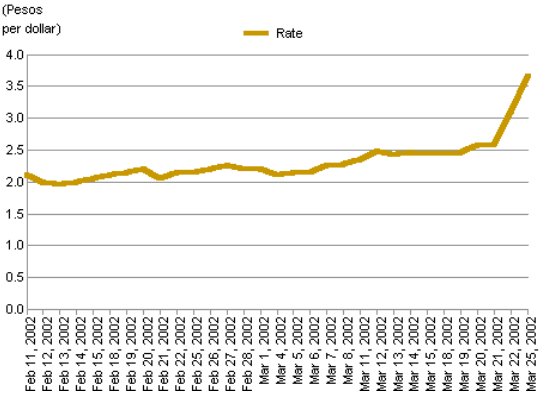
What followed was continuing chaos in Argentina, as Argentine politicians failed to rein in spending and to reform the country’s labour laws. Early 2002, the country suspended payments on its by then $132 billion in public debt, the largest default in history. Beginning of 2002, President Duhalde announced that he would end Argentina’s decade-long currency board. The peso was floated and immediately plunged by 50% against the dollar. This is illustrated in the following figure.
Figure 1: Argentinean crisis – the peso/dollar exchange rate[13]
Then, in May 2003, as mentioned in the introduction, Nestor Kirchner is elected as president and immediately starts to diminish the free-market policies that the country followed in the 90’s. We will come back to his policy and Argentina’s future development in the next chapter.
Let us now end the intro of this chapter by having a look at the following table and graph, which provides a clear picture of Argentina’s development over the last years.
Table 1: Economic data over the last four years - Argentina[14]
|
|
2000 |
2001 |
2002 |
2003 |
|
GDP per head ($ at PPP) |
12,402 |
12 |
10,69 |
11,46 |
|
GDP (% real change pa) |
-0.79 |
-4.41 |
-10.89 |
6.90 |
|
Government consumption (% of GDP) |
13.78 |
14.16 |
12.24 |
11.70 |
|
Budget balance (% of GDP) |
-2.39 |
-3.25 |
-1.46 |
1.50 |
|
Consumer prices (% change pa; av) |
-0.94 |
-1.07 |
25.87 |
13.40 |
|
Public debt (% of GDP) |
45.04 |
53.76 |
111.70 |
64.00 |
|
Labour costs per hour (USD) |
4.23 |
4.06 |
1.35 |
1.65 |
|
Recorded unemployment (%) |
14.55 |
16.40 |
18.80 |
14.50 |
|
Current-account balance/GDP |
-3.14 |
-1.48 |
9.40 |
6.10 |
|
Foreign-exchange reserves (mUS$) |
25,147 |
14,553 |
10,489 |
14,077 |
From this table we can clearly deduce Argentina’s crisis in the year 2002. Look for example at the negative GDP growth, the increasing public debt and the high unemployment rate (18%).
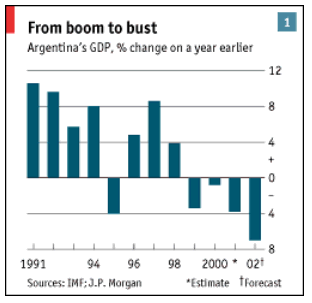
To illustrate the evolution of Argentina’s GDP from the beginning of the 90’s up until 2002, we found the following graph in The Economist. It clearly indicates Argentina’s boom through the initiative of Menem’s liberalisation policies in the early 90’s, then in ’95 a fall in GDP as a consequence of Mexico’s crisis (cfr. infra), and then the serious decrease in GDP from ’99 on.
Figure 2: Evolution of Argentina’s GDP, 1991-2002[15]
With this knowledge in mind, we would like to have a look at the above mentioned Asian and Latin American crises.
Asia
Just like Argentina, lots of countries in this region were doing extremely well before the currency crisis, started in Thailand, hit them in 1997-1998.[16] In contrast to the Argentinean case, numerous of these countries, which include Singapore, Hong Kong, South-Korea and Indonesia, were already growing at an extraordinary pace over the past three decades. To illustrate, the average annual GDP growth was about 7% percent during 1970-2002, compared with 3 percent in OECD countries.
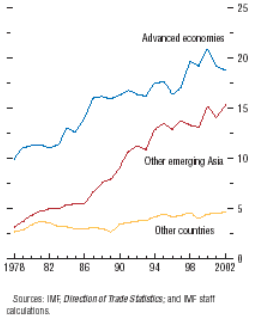
An important characteristic of the rapid economic development of emerging Asia has been the emphasis on outward-oriented growth strategies. This has been reflected in high trade growth and a steady increase of emerging Asia’s share in global trade, which more than doubled from 8% in 1978 to 19 percent in 2002. The following figure represents emerging Asia’s growth as a result of increasing exports.[17]
Figure 3: Emerging Asia – Exports (percent of emerging Asia’s GDP)[18]
In contrast to a weak global environment, the region accounted again for a strong growth performance in the period 2002-2003. Effects of the Argentinean crisis were minimal here, as the Asian countries had learned their lesson from their crisis.[19] Emerging Asia accounted for 44% of world GDP growth in 2002 and for 24% of export growth in the rest of the world.
Exports continue to play an important role in the growth of the Asian economies. What’s remarkable here is that the region is becoming more and more a growth engine on its own through its extensive intraregional trade, which makes it less dependent on the rest of the world.[20] Increased trade integration has clearly resulted in closer links between economies in the region and greater business cycle correlation across countries. China is an important factor in the rise in intraregional trade. Together with Hong Kong SAR, China absorbed 17% of exports of other countries in emerging Asia in 2002, and accounted for 35% of export growth of other countries in the region in 1998-2002. China plays a dual role in Asia’s development: It is not only the region’s main production hub, but it also becomes an important emerging consumer of final goods.
What we’re going to do next is pick out some of these emerging economies and compare them in a certain way to Argentina. First we will compare Argentina’s crisis with the one that hit Indonesia as a consequence of the currency crisis that started in Thailand in 1997.
Argentina and “Asia’s Argentina” - Indonesia
The case of Indonesia has often been called “Asia’s Argentina”. Indonesia, for a long time led by its strong ‘dictator’ Suharto, was, like a lot of East Asian economies, performing very well over the last decades. To illustrate, while its GDP in 1967 was nearly half that of Nigeria, India or Bangladesh, in 1997 it was five times the GDP of Bangladesh, four times that of Nigeria and three times that of India.[21] Indonesia was a special case in Asia though, as it was characterised by frequent corruption activities, just like in Argentina (see appendix 1), though that didn’t stop investors from pouring money into the country.
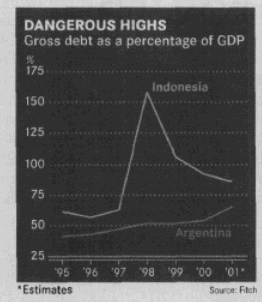
At first blush, Indonesia and Argentina seem remarkably alike. Up until a few years ago, both countries were magnets for foreign investment and almost universally praised for their economic policies. More recently though, both have fallen on troubled times and have turned to the IMF for advice and cash. Indonesia’s net external debt was in 2001 at similar levels as Argentina’s ($95 billion or 61% of GDP vs. 46% for Argentina) and even exceeded 150% during the Asian crisis.[22] This is illustrated in the following figure.
Figure 4: Comparison of gross debt (% of GDP) Argentina - Indonesia[23]
There do are some major differences between the economies of the two countries. First of all, Indonesia’s debt is owed to multilateral lending agencies and rich-country governments, not to private investors as for Argentina, who tend to be more impatient. Next to this, Indonesia’s rupiah was floated during its crisis, not pegged to the United States dollar as for Argentina.[24] This flexible exchange rate helped keep Indonesia’s exports competitive, while Argentina finally had to leave the currency board system to substitute it with a floating exchange rate system. A third important difference between the two countries, and maybe the most important one, is that Argentina lost the support of the US and the IMF, while Indonesia did not.
Let us here move on to Thailand, the country where the Asian currency crisis started (for some countries though, like Thailand and Indonesia, it also became an economic crisis).[25]
Argentina, the Thai crisis and the different speeds of recovery of emerging economies
As already mentioned, for this section we’re going to use a slight different approach than before. Already with one eye on the future, we will basically consider here, together with P. Desai and P. Mitra (2004) , how it comes that the Asian economies were quite quickly able to recover from their crises and why Argentina (probably) won’t. Specifically, like said before, we will consider the Thai case.
According to the two aforementioned authors, the speed of recovery of an economy after a financial crisis depends on the status of three macroeconomic fundamentals. These are: balanced or surplus government budgets, high overall saving in the economy, and solid export performance. For the first factor I want to refer here to footnote 25, where the authors explain how healthy fiscal conditions in the Asian countries made it possible for them to recover more quickly.
The second factor is important according to the authors because high overall saving in the economy implies that more domestic funds may be available for lending, and thus for supporting investment even during the crisis phase. Consequently interest rates may shoot up less, and the contraction of investment and GDP in the post-crisis period may be moderated. As saving rates in the East Asian Four (Thailand, South-Korea, Indonesia and Malaysia) ranged from over 25 to 35 percent or higher of GDP, for Argentina these were stagnant at 15 percent (Desai & Mitra, 2004, p. 4).
Finally, for the third factor, a strong export sector (cfr. supra) would provide the East Asian group with the capability of generating the much-needed foreign exchange in the post-crisis period. After the crisis, most companies benefited from the increased demand resulting from the lower exchange rate. Furthermore, the depreciated exchange rate made the Asian companies with their highly developed manufacturing infrastructure attractive pickings for foreign investors. These factors contributed to a rapid revival of foreign investor confidence in the East Asian Four.
By contrast, the uneven and generally feeble performance of Argentine export sectors (cfr. supra) was unable to bring back foreign creditors. According to the contrasting export performance of the two sets of countries, the pre-crisis, average annual growth of Thai exports in dollars was three times that of Argentina in its pre-crisis years. This is illustrated in the following figure.
Figure 5: Total Annual Exports in US Dollars[26]
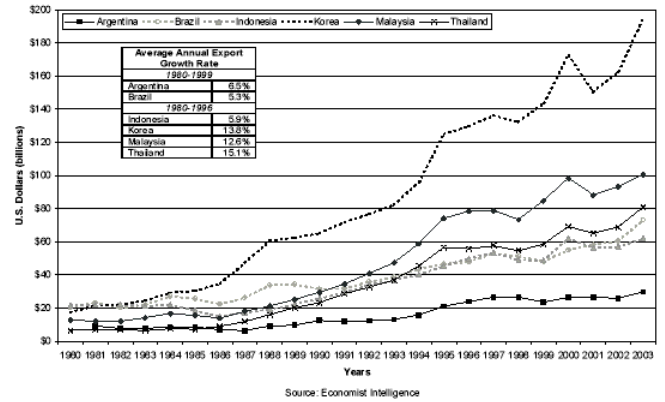
The conclusions from the study by the two authors are straightforward. They state that the pre-crisis differences in export strength between Argentina and Thailand (acting through investor expectations) is clearly large enough to explain the post-crisis pace of recovery. The export earning capacity of an economy reflects its debt repayment potential by generating foreign exchange earnings and restoring investor confidence. The different speed in recovery between the two countries suggests then that investors focus essentially on an economy’s ability to generate foreign exchange and repay its external debts.
Let us finish our Asian trip here and continue to Latin America, Argentina’s home continent, that seems like poisoned with economic struggles reflected by its numerous crises.
Latin America
Latin America’s economies seem like never fully getting on the stage of international business as a real power to reckon with. It has been characterised by numerous crises (Mexico in 1994-1995, Brazil in 1999 and Argentina in 2002) and hyperinflation over the last decades, and never seems to fully recover. As for all the optimistic headlines about recovery this year in Latin America, the truth is that even the most optimistic projections (of up to four procent growth) mean that the continent is still falling behind. This GDP growing rate is not fast enough to produce jobs for the growing population, to catch up with much faster-growing countries in Asia, Eastern Europe and even Africa, or to end a period of stagnation that now dates back to 1980. Since then, annual GDP growth in Latin America has averaged less than 3 percent and, far more ominously, per capita GDP growth has averaged negative every year for the last five years.
It is now widely agreed that, given a degree of macroeconomic stability, the key to economic growth is the creation of a vibrant private sector, and it’s there that Latin America has fallen off the rails. By the end of the 1990’s, Latin America accounted for a fully 55 percent of total privatisation revenues across the developing world, dwarfing the numbers from Southeast Asia. But it’s now clear that the appearance of rapid change was largely an illusion: trade barriers fell and government-run enterprises were sold, but rather than dispersing the power and capital of the state, the bulk of it was simply transferred to a dysfunctional private elite. Indeed, not as in Asia, governments in Latin America were generally less willing to allow real competition in privatised industries ... .
And so Latin America keeps lagging behind, without much change or innovation. Its economy today remains largely built on commodities like oil, raw metals and farm produce. The problems associated with commodity-driven economies are politically explosive: they tend to produce plantation societies and mining towns, and don’t create an expanding and increasingly well-educated middle class. They also make Latin America more vulnerable than others to highly cyclical demand in richer nations ... .
Consensus is there about what has to be done: a “second wave” of reform to create a working private sector, as Latin America still has the most burdensome regulations, notably ineffective courts and the weakest investor-protection laws in the developing world outside Africa. For example, it takes two months on average to open a new operation in Mexico, in China less than a week. We already know now that Argentina is on the growth track again, but that would never make up the ground lost in the crisis of the previous years.[27]
What we’re going to do for this paragraph is illustrate the effects of the Mexican crisis on Argentina. We’ll realize that Argentina got severely hit, but also that it was able to quickly recover.
“Drinking bad tasting tequila”: Mexico’s crisis (1994-1995) and its effects on Argentina[28]
The Mexican crisis actually proceeded in two stages. In early 1994 foreign investors became wary, as a result of election-year instability. Consequently, capital flows dropped sharply in the second quarter of 1994, raising the threat of currency depreciation and slower growth. The Bank of Mexico continued to peg the exchange rate and also expanded domestic credit, in a try to preserve confidence. The result was a steady decline in reserves, from around $28 billion in February 1994 to only $10 billion in early December 1994. After the change of government in early December, reserves went further down though, reaching about $6 billion at their lowest point. Over December 19 to 22, the currency was devalued and then allowed to float.
The second stage of the Mexican crisis began immediately after the devaluation. International and domestic creditors started to realize that the Mexican government was due to repay around $28 billion of dollar-dominated debts within the next few months, but it had only $6 billion of reserves (cfr. supra). Suddenly, Mexico was unable to borrow new funds to service this debt. Thus the Mexican government was pushed to the edge of default in early 1995. In the event, the US and the IMF gave an emergency international loan to Mexico. The Mexican government used the loan to retire the debt and was finally able to repay the loan ahead of schedule, in 1996.
Now what happened in Argentina during this period? Even though the Argentinean economy was performing strongly in 1994 and early 1995, investors became nervous and started to withdraw funds from its banks in the aftermath of the Mexican collapse and in anticipation of the May 1995 elections in Argentina. Consequently, banks were pushed to the brink of illiquidity and default and Argentina escaped a total collapse by means of an emergency international bailout loan that combined funds from the IMF, the World Bank, the Inter-American Development Bank, and some private creditors.
As shown in the following figure, Argentina, like Mexico, suffered an abrupt collapse of GDP in 1995, followed by a rather swift recovery in 1996 and 1997.
Figure 6: Real GDP growth rates, Argentina and Mexico, 1991-1997[29]
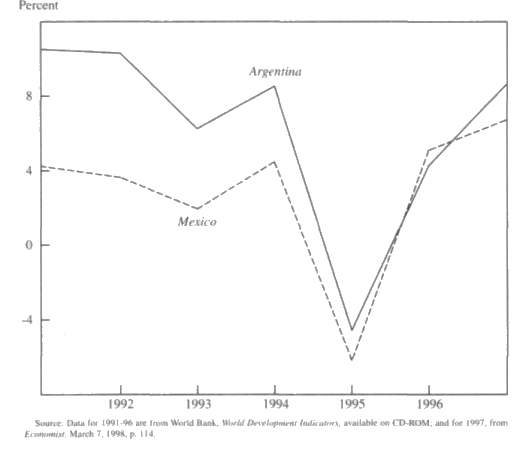
Mexico and Argentina were vulnerable to crisis because both were illiquid, in the sense that short-term liabilities to foreigners exceeded short-term assets (reserves). It is interesting therefore to look at the following table. There, the short-term debts owed to international banks of several emerging markets are compared with foreign exchange reserves held by the central bank.
Table 2: Short-Term Debt and Reserves, Selected Developing Countries, 1994 and 1997[30]
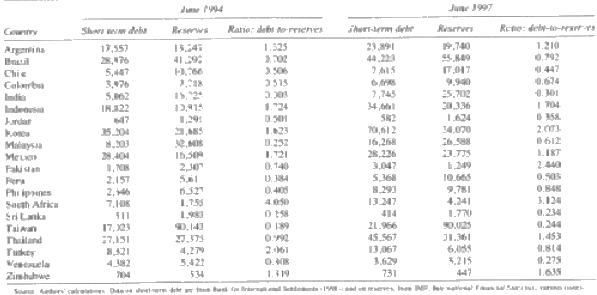
The table illustrates clearly that for both Mexico and Argentina, this ratio had reached a vulnerable range in 1994.
Let us here, to end our trip to Asia and Latin America, summarise which economic features of Argentina, according to the IMF, stood out when compared to other emerging economies. The following table provides us with the numbers.
Table 3: Indicators of Economic Structure in Selected Emerging Market Economies (In percent; period average)[31]
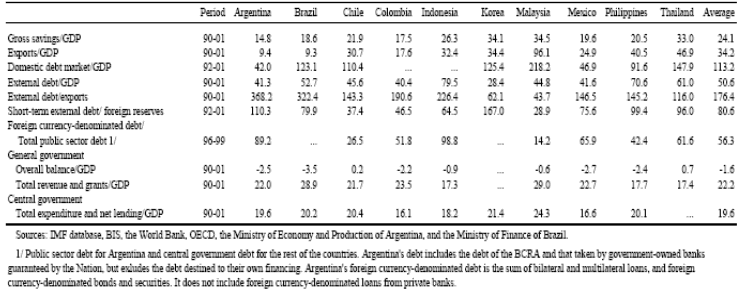
With regard to the general economic structure, we can say that Argentina had a particularly low gross savings rate, a particularly small market for domestic debt and, along with Brazil, a
particularly small export sector. The small size of the domestic debt market was in part a
reflection of the low savings rate, and caused Argentina’s public sector to borrow heavily in
international capital markets.
With regard to the external debt structure, we can read from the table that, relative to GDP, Argentina’s external debt was not so high. Its ratio to exports (at 370 percent), however, was substantially higher than in other countries, though comparable to Brazil’s. An important feature of Argentina’s public debt structure was that a substantial portion of external debt (about 90 percent for 1996–99) was foreign currency-denominated, compared to the average of 56 percent for the other countries.
Finally, with regard to fiscal structure, the average fiscal balance of Argentina’s general government was a deficit of 2.5 percent of GDP during 1990–2001, which was worse than the balances in all other countries except in Brazil, but the overall fiscal characteristics cannot be said to be too different from the other countries it’s compared with. Argentina’s fiscal balances, however, deteriorated sharply from the late 1990s, and that’s when troubles began. At the onset of the crisis in 2001, its general fiscal deficit was as large as Brazil’s (in 1998) and far larger than those of the other crisis-hit countries at the time of the crisis. This is also illustrated in the following figure.
Figure 7: General Government Fiscal Balance in Risk Countries (In percent of GDP)[32]
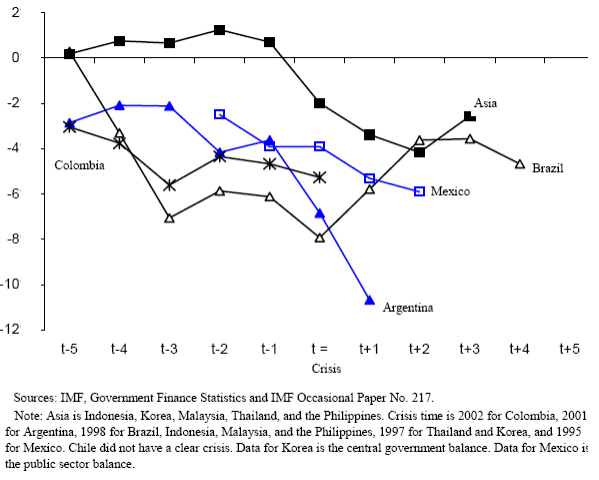
With this general reflection I would like to move on to a next paragraph, where we will have a short intermezzo immediately relating to what has been written above.
Intermezzo: Fix or float, sink or swim for emerging economies?
It may be interesting, after our trip through the crises in Asia and Argentina, to consider this question here, as it appears to be a very important and decisive one for a lot of emerging economies.
The debate about whether it is better to fix exchange rates or let currencies float is one of the longest-running in economics. Both approaches have their merits. A floating rate can help a country cope with a sudden drop in the price of its exports or a surge of foreign capital. This should be attractive to emerging economies, which are especially vulnerable to such shocks (cfr. the Indonesian case).
Yet many emerging economies, like Argentina, peg their rates one way or another. One reason is that a commitment to a fixed rate, or a variant of it, can help to cut inflationary expectations. That was one of the main reasons for Argentina too, to finally deal in an effective way with the hyperinflation that had characterised the country for such a long time. Another reason is that a fixed exchange rate also means a less volatile environment for investors, boosting growth and thus benefiting the country. The drawback of this exchange rate system then is that when external shocks occur, domestic prices and wages come under pressure.
An important worry for the governments of emerging economies has been the huge inflow of foreign capital that a newly stabilised country often attracts. By expanding the money supply, foreign inflows can easily fuel inflation. If the capital suddenly flees, these countries are faced with major problems, as happened in Argentina. One answer may be to implement some kind of capital controls, but these may also not be too strict, or they will only deter foreign investors. When dealing with inflation, monetary policy also has its limitations. Through the technique of “sterilisation”, governments can absorb extra cash by selling bonds, but the technique is quite expensive and eventually can prove ineffective. Conversely, high interest rates can stop capital flooding out. But a long period of sky-high interest rates, which may be necessary to defend the exchange rate, can cause problems with the country’s banking system. Exactly such fear of financial problems is the reason why investors leave the country with their capital as they think that an overvalued exchange rate is possibly a prelude to a devaluation of the currency, leaving their assets worthless.
Let us conclude here to say that neither fixed nor floating rates are substitutes for sound macroeconomic policies.[33] Either can work if a country shows sufficient commitment. One reason why the currency board then didn’t finally work for Argentina may be due, at least for one part, to a bad managed fiscal policy. Fixed exchange rate regimes require tight fiscal policies when money floods in to dampen aggregate demand. In Argentina, the government just kept on spending money, while its tax revenues weren’t great enough to cover them.[34]
Eastern Europe
“Hand-out or invisible hand” for the new member countries of the EU?
To fully complete our global trip, we might also turn our heads in the direction of Eastern Europe, where, with the enlargement of the EU, significant changes are on its way for these transition economies and their emerging markets. Things are quite different though here than in Asia and Latin America, but it seems interesting for us to stand still for a moment here with the future development of the economies of these countries.[35]
The big question with the enlargement of the EU is whether and till how far should aid from the EU flow to these countries to assist them with their development? Normally, regional aid from the EU goes into physical infrastructure, such as roads or sewage systems, with much of the rest financing and education. The economic rationale for this is that investment in infrastructure and education is supposed to create “externalities”, benefits that go beyond the immediate recipient of the money.[36] Since private investors do not take into account these externalities, the level of investment in infrastructure and education may be below its optimal level unless governments step in. The following table summarizes the fund allocations to the new member states.
Table 4: Cohesion and structural fund allocations for the new member states, 2004-2006[37]
|
Cohesion fund (Euro m at 1999 prices, unless otherwise indicated) |
Structural fund |
Total |
Per capita |
|
(Euro) |
|
|
|
|
Czech Republic |
836 |
1,491 |
2,327 |
|
Estonia |
276 |
342 |
618 |
|
Hungary |
994 |
1,853 |
2,847 |
|
Lithuania |
543 |
823 |
1,366 |
|
Latvia |
461 |
575 |
1,036 |
|
Poland |
3,733 |
7,635 |
11,368 |
|
Slovenia |
169 |
237 |
406 |
|
Slovakia |
510 |
1,050 |
1,530 |
|
Total |
7,522 |
14,006 |
21,528 |
|
Sources: European Commission, Second progress report on economic and social cohesion |
|
|
|
The role of regional aid for new member countries has been quite ambiguous in the past. Spain, joining in 1986, has long time been the largest recipient of EU aid, although it did most of its catching up before it joined the EU. Ireland, also a big recipient, has overtaken the EU income average in the past decade, but its growth was mainly driven by good policy and FDI inflows, which amounted to 20% of GDP in the late 1990’s, far exceeding the levels of EU aid. The European Commission itself admits that since 1989 GDP in Ireland and Spain was only 3% higher than it would have been without aid. The effects of regional aid may then sometimes turn itself against these countries. For example, the inflows may push up the exchange rate, thus undermining the competitiveness of domestic industries, while higher public investment may “crowd out” private investment, as the quantity of government borrowing forces the interest rates to go up. Greece is a clear example of this. By freeing up government money for extra consumption there, sometimes in excess of the aid, the extra spending can widen the budget and current-account deficits and push up debt-levels.
Will the new member countries then suddenly experience any boost to growth following their accession? Probably not, since, unlike the southern European enlargement before, Eastern Europe opened their economies to trade and investment from the EU long before their accession. In fact, by 2002, trade between the EU and the candidates was almost completely liberalised. In proportionate terms (or as a share of total trade) many of the candidate countries now trade with the EU as much as, or more than, the EU members do with one another.
The following table presents a 5-year region forecast for Eastern Europe. It indicates moderate GDP growth changes of 4 to 5% annually.
Table 5: 5-year country forecast – Eastern Europe[38]
|
Key indicators |
||||||
|
Eastern Europe(a) and CIS(b) |
2003 |
2004 |
2005 |
2006 |
2007 |
2008 |
|
Real GDP growth(c) (%) |
5.4 |
4.8 |
4.7 |
4.6 |
4.6 |
4.6 |
|
Consumer price inflation (av; %) |
8.6 |
8.0 |
7.4 |
6.2 |
5.5 |
5.2 |
|
Current-account balance (% of GDP) |
1.9 |
0.0 |
-0.5 |
-1.1 |
-1.4 |
-1.9 |
|
(a) The Balkan states of Bulgaria and Romania, and the Visegrad countries of Poland, Hungary, the Czech Republic and Slovakia. (b) Russia, Kazakhstan, Ukraine and Azerbaijan. (c) Weighted averages. |
|
|
|
|
|
|
Much of the future development of many of these countries doesn’t depend to a great extent on the regional aid they receive. It would also be unfair to suggest that EU aid is entirely irrelevant or counter-productive. Spent wisely as part of a wider national development effort, an economy, can, in theory, derive significant benefits. But it is economic policy that remains the crucial component of how effectively aid is used, and of overall growth.
In this respect, Eastern Europe should learn a lot from Ireland if it wants to emerge as a strong power. Its economy stagnated for over a decade after EU accession, but growth soared once the government implemented macroeconomic stabilisation policies and micro reforms. Ireland turned a huge budget deficit into a surplus. Its supply-side reforms included, among others, market deregulation, labour market liberalisation and lower taxes. More importantly, Ireland created relatively stable and transparent institutions that helped spur a boom in FDI.
With this I want to end this first chapter and move on to the second big part of this paper. There, we will look a bit closer at the current situation of Argentina.
Argentina at the crossroads ... again
The current situation in Argentina with regard to economic policy is, according to Guillermo Sabbioni, quite ambiguous.[39] I quote: “The actual government is a mystery: It seems that they don’t like market forces and they prefer subsidies and nationalization of firms, but at the same time, when they see that investors don’t like that kind of intervention, they moderate the speech and pretend they like free market forces. I think the real truth is that the government would prefer a lot of intervention in the economy, but that they also accept that it is really difficult”. This is in line with what we’ve seen above.
It indeed seems that current president Nestor Kirchner wants to step away from the liberalisation drive that served the country so well in the 90’s to a more state-led economy, reminding of Peronism.[40] He appears to be stepping away, at least in part, from the policies of the “modernity decade” that Argentina experienced for the first time in 50 years, a decade in which, for the first time, inflation was kept low, a working telephone system and long-term home mortgages existed, as Marc Falcoff states it in his article in the Wall Street Journal (04.01.2004, p. 13).
In an article that appeared in EIU ViewsWire (28.07.2004), we can read the following: “In the economic policy arena, the Kirchner government signals a departure from the free-market orthodoxies of the 1990s. There will be a more active role for the state, primarily in terms of improved regulation, but also as a stimulator of demand through social assistance programmes, and as a shareholder in new enterprises in the energy and transport sectors. The severe turmoil created by the collapse of the currency board and its associated dislocations has receded, but it has bequeathed a challenging policy agenda that will need to be advanced in order to foster the development of a vibrant private sector over the medium term”.[41]
Currently, among the most pressing issues for Argentina is the restructuring of its defaulted sovereign debt. In order to facilitate competitiveness over the long term, the Argentinean authorities should also reform the tax system, promote investment in infrastructure and foment sustainable growth of credit markets. The authorities also should try to make efforts to attract new investment by gradually re-establishing stable rules. Moderate growth in the medium term will be supported by merchandise exports and tourism. The constraints on investment growth and the authorities' limited ability to stimulate demand via fiscal and monetary policy will probably preclude a more rapid expansion.
EIU ViewsWire produced the following table about the economic country forecast for Argentina. It indicates only a small growth over the following years as a consequence of capacity constraints of the economy in the recovery momentum of its crisis.
Table 6: Argentina – country forecast summary[42]
|
|
|
Key indicators |
2003 |
2004 |
2005 |
2006 |
2007 |
2008 |
|
Real GDP growth (%) |
8.7 |
6.1 |
4.2 |
3.7 |
3.3 |
3.7 |
|
Consumer price inflation (av; %) |
13.4 |
5.0 |
5.9 |
3.6 |
3.3 |
3.0 |
|
Budget balance (% of GDP) |
0.5 |
1.5 |
0.8 |
0.3 |
-0.7 |
-0.5 |
|
Current-account balance (% of GDP) |
6.4 |
3.2 |
1.7 |
1.1 |
1.3 |
1.3 |
|
Lending rate (av; %) |
19.1 |
9.1 |
15.0 |
17.0 |
16.5 |
16.0 |
|
Exchange rate Ps:US$ (av) |
2.9 |
2.9 |
2.9 |
3.0 |
3.0 |
3.0 |
More important for Argentina now, as it wants to cross its crossroads once and for good, are the lessons that it should draw from the past financial crisis. That’s what we’re going to do in the next paragraph.
Lessons from the crisis
It’s already clear that probably the biggest factor that contributed to Argentina’s crisis was its inability to reduce its high public and external debts, which made it vulnerable to adverse economic shocks and shifts in market sentiment. In the end of 1990s and through to 2001, Argentina’s public debt to GDP ratio grew to nearly 65% in 2001, coming from 35% in 1995.[43] There is not such a point at which public debt becomes unsustainable though, and Argentina’s public debt to GDP ratio of 65% in 2001 was still lower than that observed in some European countries (look at Belgium!). However, given the history of defaults and macroeconomic stability in emerging markets like Argentina, that point may be much lower than in advanced countries. Furthermore, limitations on tax collection capability imply that a higher public debt/GDP ratio makes emerging markets more vulnerable to adverse shifts in market sentiment.
Also, like previously mentioned, Argentina’s exports of goods and services were quite low, about 10% of GDP, implying very high external debt/export ratios that accentuate its vulnerability to external debt crises. Next to that also comes the fact that its debt had to be serviced in foreign currency, which was made more difficult by Argentina’s low export-to-GDP ratio.
In the view of some observers, Argentina’s debt position would have been sustainable if only uncertainty had not triggered a crisis (cfr. supra). This seems for some part true, but it doesn’t take into account that Argentina could have reduced its vulnerability there by aggressively reducing its public and external debts. With an eye on the future, we can say that cutting Argentina’s public debt requires reductions in government spending, tax reforms designed to increase government revenues (currently, President Kirchner is working on that), and policies to stimulate export growth over the medium to long term.[44] The successful adoption of such policies is the key challenge facing Argentina and a number of other emerging economies, and it is an important prerequisite for achieving stability in a globalized economy.
President Kirchner: “Why would anybody want to invest in Argentina”?
With this question, Argentine President Nestor Kirchner travelled to the US in the beginning of May, this year, only to find that even a visit with the President of the US would fail. When Kirchner held his speech, not many were present for his explanations about “Kirchnerian Argentina”, and this may be the right setting to continue this paragraph ... .
When asked this question, Guillermo Sabbioni answered the following: “Argentina doesn’t seem a viable host country to multinational investment (unfortunately). The law changes all the time. Justice does not work that well, so uncertainty and risk are really high (so are the opportunities of profits, like in any business). But the rate of return that I would ask to any investment in Argentina is so high (in order to compensate for the risk) that I don’t think such a kind of investment opportunities exists, actually”.
Basically, what investors do when looking for investment opportunities in countries is assess that country’s risk. Here we enter the field of country risk analysis, that is “the assessment of the potential risks and rewards associated with making investments and doing business in a country” (Shapiro, 2003, p. 198). This risk analysis should not only be economic in nature, but also political. And this may maybe present the highest problem for Argentina, after all the political turmoil over the past years. One indicator of political risk is the frequency of changes of government ... .
Also, during the crisis, fundamental confidence was damaged between the Argentineans and the government as “by seizing its citizens' savings, the government has broken a basic contract, and violated the rule of law. Trust between government and citizens, the essential glue of a prosperous democracy, has been destroyed”.[45] It seems like it may take some time before investors will start to attribute again some credibility to the new Argentinean government ... .
In the Latin American Monitor we found the following rating and ranking of Argentina’s short-term political and economical risk for August 2004.
Table 7: Short-term political and economic risk Argentina – Latin America[46]
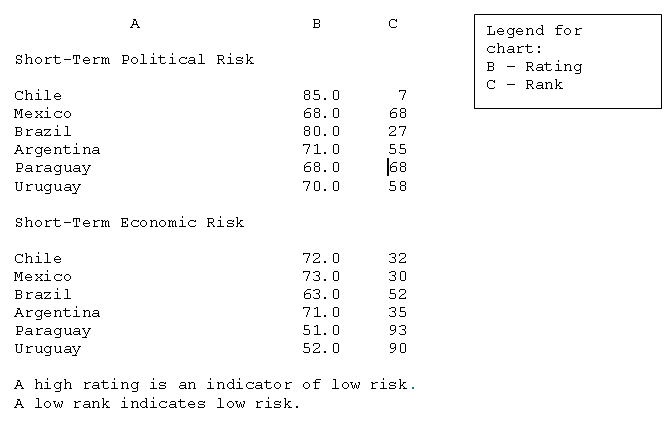
From this table, we can clearly read that the risk for Argentina is not in the first way economic of nature, but more political, as the country clearly scores less here than Latin America’s other two major economies, Chile and Brazil.
To the economic risk, I would like to add the following. Currently, Argentina is going to some kind of energy crisis as demand for both gas and electricity, after the devastating financial crisis of end 2001, is booming. It may seem as for the winter of 2004 some companies may be deprived of fuel, as the country’s gas transportation infrastructure is saturated.[47] This may also slow down the country’s economic recovery for the next year ... .
A nice story that appeared on Global Insight can illustrate what it means to invest in Argentina these days. I quote the full paragraph.
If your company wants to invest in the energy market in Argentina, you may want to first speak with previous investors before making such a mistake. Otherwise, you might repent, as it has happened to those that remain there. If you choose to go ahead anyway, it would be important to note that the government is going to create a state-owned energy firm to "guide" other firms in the industry. Translating this into Kirchnerian economics means that the government would subsidize the state-owned firm in such a way that you would have to match their subsidized prices, even though your firm does not receive subsidies from the government. The result: your firm would lose money and your investment would go sour. Thus, in Kirchnerian Argentina, industry regulators are out, "guiding" state-owned firms are in.[48]
Peronist times seem to be coming back and conditions don’t seem that favourable anymore for investors, as more and more intervention by the state may be expected in the future ... .
Currently, the country is doing well though. Argentina has registered both robust economic growth and strong fiscal performance last year and in recent months. GDP expanded by 8.7% in 2003 (cfr. supra), reversing four years of steep recession. It further grew by 11.2% in the first-quarter of 2004. Total output was up 1.7% on a quarter-on-quarter basis in Q1 2004, equivalent to an annualised growth rate of approximately 7%.
However, this growth is vulnerable to deterioration. GDP expansion has been greatly assisted by high international prices for Argentina's commodity exports, such as soybeans, and by healthy external demand in general. Should these prices decline substantially or the present global recovery stall, Argentina's export-led growth would be compromised. Moreover, once the country resumes payments on its external debt, its fiscal accounts will come under new strain... [49]
Finally, with Kirchner’s tax reform aimed at recovering the economy, the Argentinean business environment may be said to be not that attractive for foreign investors, as taxes might be expected to rise.
Problems with managing a multinational company in Argentina
To this question Guillermo Sabbioni answered the following: “Finding highly qualified people is not a problem, and salaries are not either, because the unemployment rate is high so u can offer a low salary and u can get a lot of labour supply for just one position. I think the problem could be the unions and strikes if u have a big staff. The effort that people do is not a problem either, because we are used to work a lot, many hours per day and short vacations”. If we want to understand the labour force, we should first look back in history, that is the 90’s, where the government of Carlos Menem introduced a lot of changes.
During the first half of the 1990s, the Argentinean government embarked on a number of reforms aimed at enhancing labor market flexibility. These reforms took place in three phases: 1991, 1995, and 1998. The first set of reforms represented a small improvement in labor market flexibility, introducing fixed-term contracts and special training contracts for young workers. In 1995, the government, business organizations, and the Confederation of Labor reached an agreement on facilitating temporary hiring and more flexible working hours for small and medium-sized firms. As a result of these reforms, the proportion of workers with fixed-term or training contracts increased substantially, from 6 percent of all employees in 1995 to 12 percent by 1997.
But further progress in deregulating the labor market was limited, and some new
measures even reversed earlier reforms. Also the payroll tax, although it was reduced from 49 percent of gross earnings in the early 1990s to 43 percent by 2000, remained high by international standards.
Today, with Kirchner in office, labor unions will seem to be getting more power in the bargaining process, although wage increases will be tempered by continuing high levels of unemployment and moderate rates of expansion in aggregate demand.
There was recently a case that illustrates how the Argentinean government deals with its workers, namely the Bridgestone/Firestone case. Workers seem to appear easy up in the streets. In Rubber & Plastic News, we found the following article:
A dispute between Bridgestone/Firestone Argentina S.A.I.C. and employees at its Buenos Aires tire plant, dating back to last October, escalated Dec. 30 when several dozen workers left their jobs to take part in a demonstration taking place outside the plant.
BFS Argentina responded by suspending indefinitely 80 workers who the company identified as having left their jobs, a spokeswoman for Bridgestone Americas Holding Inc. said. The plant is running at its scheduled capacity, she said.
The tension between the union and management goes back to October, when workers struck the factory for a week following a decision by management to refuse entry to the plant to representatives of the union, Sindicato Unico de Trabejadores del Neumatico Argentina, or SUTNA, the spokeswoman said.
The firm, citing labor instability, subsequently tabled plans to invest $50 million in the facility and scaled back operations to six days a week from seven, the spokeswoman said, resulting in the layoff of 65 employees. Before that, BFS invested $101 million in the plant during 2001-02 to lay the foundation for expanded production on a continuous schedule, she said.
The Argentine Labor Ministry intervened Dec. 5, ordering BFS Argentina to reinstate the workers, but the company refused, according to the International Federation of Chemical, Energy, Mine and General Workers' Unions. The union has threatened a general strike unless the company relents.
The company did not rule out making the $50 million investment in the future, once it is assured of a "stable labor environment," the official said.[50]
I think this example clearly illustrates the difficulties companies face managing their workforce in Argentina.
With regard to profits and growth, for the upcoming year, the expected shortage in energy supply will play a major role. In table 6, we’ve already considered Argentina’s economic country forecast. The year 2005 doesn’t seem that bad yet, but in the following years it seems that Argentina’s growth will slow down.
As for the manufacturing sector (next to agriculture, Argentina’s biggest economic sector), recovery is on its way through increased domestic consumption spending, rather than by exports. Domestic consumption has been stimulated by higher real incomes and low inflation.
As for producers of agricultural machinery, these are working close to full capacity utilisation, but producers of other types of machinery continue to suffer from credit restrictions and import competition. This uneven pattern of growth is expected to depress overall production levels in 2004. In addition, levels will also be affected by power shortages, though some sectors will be hit harder than others.
I would like to end our exploration of Argentina’s economy here. What rests is a general conclusion.
What can we conclude from our exploration? The main conclusion is that emerging economies struggle ... and seem to continue struggling. The decade of the 90’s, as we have seen, is a clear example of this. Crises hit several countries in Latin America and Asia. Our focus was on the Argentinean case, one of the biggest financial crises in history. Argentina was doing well though, just like all the other countries that suddenly got hit. In the 90’s it became thé example of good economic policy for the world. Growth rates that hadn’t been seen before characterised the country and reminded its rulers of glorious periods from the past ... .
Soon though, fate stroke the country as in 1994 the Mexican peso collapsed. It appeared to be only the beginning of a series of external shocks that would finally put the country in its biggest financial crisis ever in 2001-2002. Probably the most important factor, as we have seen, was Argentina’s large public debt compared to GDP, which made it sensitive to external shocks. The government kept on spending money, while tax cuts followed ... . The financing of all this happened through loans from the World Bank and assistance from the IMF and other institutions, but also, more importantly, through private creditors. When investors started to get nervous though about Argentina’s economic policy and began to see an overvalued exchange rate that didn’t reflect the real exchange rate anymore, they started to get their capital out of the country, in fear of a possible devaluation, which would leave their assets worthless. Meanwhile president change after president change occurred, and people started getting in the streets, in protest of the bad performance of their “government”. Argentina finally had to leave its pegging to the dollar and the peso was floated.
Currently, some rest seems to have come to Argentina, as Nestor Kirchner has come into office and immediately instituted a tax reform and increased the level of state intervention in the economy. As for the future years, this will probably not attract much new investors, but primary concern lies elsewhere for the moment for Argentina. It has a debt to settle, and once it has been able to do that, glorious times might come back again. Argentina at the crossroads? Hopefully the next one do can be crossed ... .
TIMELINE OF SELECTED EVENTS, 1991–2002
Date Events
1/30/91 Domingo Cavallo takes office as Minister of Economy.
An exchange rate band is established, with the lower band of 10,000 australes
and the upper band of 8,000 australes to a dollar.
3/27/91 Argentina, Brazil, Paraguay and Uruguay sign treaty establishing Mercado
Común del Sur (MERCOSUR).
3/28/91 The Convertibility Law is approved by Congress.
4/1/91 The Convertibility Law takes effect, with the parity of 10,000 australes per dollar.
7/29/91 IMF Executive Board approves stand-by arrangement with Argentina.
11/1/91 President Carlos Menem announces a broad program of economic deregulation
and trade liberalization.
11/14/91 The Employment Law is approved by Congress, authorizing temporary contracts
and capping indemnity.
1/1/92 The peso replaces the austral at the conversion rate of 10,000 australes per peso.
3/31/92 IMF Board approves extended arrangement with Argentina.
5/27/92 Port services are privatized by decree.
9/23/92 The new Central Bank Law is approved by Congress, establishing independence
and mandating price stability as its primary objective.
9/24/92 Sale of State Oil Company (YPF) is authorized by law.
11/9/92 First general strike is organized by labor unions against President Menem.
11/11/92 An agreement is reached with creditor banks.
12/6/92 Argentina enters the Brady Plan. The IMF Managing Director congratulates
Argentina on the agreement.
1/4/93 Use of dollars for current and checking accounts is authorized.
1/20/93 Last day to exchange australes for new pesos.
3/10/93 The Radical party, labor unions, and retirees demonstrate in protest of the pension
reform.
3/16/93 Peronist governors approve the constitutional reform, allowing a second
presidential term.
9/23/93 Senate approves the pension reform law.
10/3/93 Lower House elections. Peronists increase seats in Congress.
11/14/93 Olivos Pact: Carlos Menem of the Peronist party and Raúl Alfonsín of the Radical
party reach agreement on the framework for constitutional reform, allowing a
second presidential term of 4 years.
8/1/94 Constitutional Convention approves the new Constitution.
8/4/94 MERCOSUR is created, comprising Argentina, Brazil, Uruguay, and Paraguay.
11/22/94 Senate approves the privatization of Encotesa (Federal Post and Telegraph
Company).
12/23/94 Mexico devalues its currency.
1/1/95 MERCOSUR comes into effect.
3/11/95 VAT rate is raised from 18 percent to 21 percent.
3/27/95 IMF Executive Board approves extension of Argentina’s extended arrangement.
4/14/95 Government suspends five banks with liquidity problems.
5/14/95 Presidential elections. Carlos Menem is re-elected as President.
11/29/95 Lower House grants Minister Cavallo special powers for a year to balance federal
budget.
4/12/96 IMF Executive Board approves stand-by arrangement with Argentina.
7/18/96 Minister Cavallo threatens to resign if his fiscal adjustment program is not
approved.
7/26/96 Domingo Cavallo is replaced by Roque Fernandez as Minister of Economy.
7/29/96 Minister Fernandez formerly takes office.
1/2/97 A judge declares the labor reform decree unconstitutional.
3/24/97 Postal system is privatized by decree.
4/9/97 Press reports of increasing tension between President Menem and Governor
Duhalde.
4/24/97 National and provincial airports are privatized by decree.
5/9/97 A labor reform plan is agreed with unions, introducing flexibility in labor
contracts, but protecting union medical systems from competition.
8/2/97 The Radical and FREPASO parties make an alliance, subsequently to be known
as the Alianza.
8/14/97 National strike is called.
9/15/97 President Menem promises an increase in pension benefits.
9/21/97 President Menem promises an increase in teachers’ pay.
11/19/97 Alianza expresses public support for the convertibility regime.
2/4/98 IMF Board approves extended arrangement with Argentina.
2/17/98 Eduardo Duhalde re-launches his candidacy for 1999 Presidential elections.
2/20/98 Press reports of accord between Governor Duhalde and President Menem.
3/28/98 Alianza launches a campaign against a second presidential re-election.
4/3/98 Fernando De La Rúa is proclaimed presidential candidate for 1999 elections in
Radical party convention.
4/21/98 Eduardo Duhalde reaffirms his candidacy for 1999 presidential elections.
7/8/98 Alianza rejects the labor reform plan.
7/12/98 President Menem seeks Peronist support for a popular referendum regarding a
second re-election. The idea is rejected by both the Alianza and the Peronist party.
7/17/98 President Menem seeks Peronist support for a second re-election. Press reports of
a split in the party.
7/25/98 Eduardo Duhalde launches his presidential campaign and affirms the need for a
change in the economic model.
9/2/98 Labor reform is approved by Congress and becomes law.
10/1/98 The IMF Managing Director praises the Argentine economy.
10/5–7/98 President Menem attends the IMF/World Bank Annual Meetings.
10/9/98 President Menem reaffirms his desire for a second re-election term.
11/29/98 Fernando De La Rúa wins the nomination of the Alianza as presidential candidate.
12/2/98 Carlos Alvarez is chosen as the Alianza’s vice presidential candidate.
12/5/98 Press reports that President Menem seeks a constitutional reform but faces stiff
opposition.
1/11/99 The court denies President Menem constitutional permission for a second reelection.
1/13/99 Brazil devalues its currency.
1/15/99 Press reports of President Menem reaffirming commitment to maintain the pesodollar
parity.
2/8/99 Press reports of President Menem proposing dollarization.
2/27/99 President Menem reportedly withdraws his bid to run for the presidential election.
4/16/99 Domingo Cavallo is reported to suggest a need to modify the convertibility
regime.
5/12/99 Minister Fernandez demands agreement with Congress to guarantee fiscal
solvency.
7/14/99 Governor Duhalde is reported to consider debt restructuring.
10/24/99 Presidential and Lower House elections. Fernando De La Rúa and Carlos Alvarez
of the Alianza win, with 48.5 percent of the votes. Alianza increases its seats to 125 (from 105), while the Peronist party retains 101 seats, a loss of 19 seats.
12/10/99 De La Rúa takes office as Argentina’s president, with José Luis Machinea as
Minister of Economy.
2/24/00 A strike is called against the labor market reform proposal, stipulating
decentralization of collective labor contracts.
3/10/00 IMF Board approves stand-by arrangement with Argentina.
4/26/00 Labor reform is approved by the Senate with some modifications. Labor unions
call for a national strike.
5/5/00 National strike is called against the labor reform.
5/11/00 Labor reform is approved by the Lower House and becomes law.
6/6/00 A national strike is called.
8/17/00 Responding to public denunciations, President De La Rúa creates a special
commission, chaired by Vice President Carlos Alvarez, to investigate the bribery
charges associated with the Senate approval of the labor reform law.
9/4/00 President De La Rúa affirms that the government has not paid bribes to get the
labor reform law approved.
10/6/00 Vice President Carlos Álvarez resigns.
1/12/01 IMF Board approves augmentation of stand-by arrangement and completes
second review.
3/2/01 Minister Machinea resigns.
3/4/01 Ricardo Lopez Murphy is appointed Minister of Economy.
3/16/01 FREPASO members of the cabinet resign in protest over a proposed fiscal
austerity program. Alliance between the FREPASO and the Radical party is
broken. Labor unions call for a strike.
3/19/01 Minister Lopez Murphy resigns.
3/20/01 Domingo Cavallo is appointed the new Minister of Economy.
3/26/01–3/28/01 International rating agencies lower Argentina’s long-term sovereign rating.
3/29/01 Minister Cavallo secures “emergency powers” from Congress.
4/14/01 Minister Cavallo announces a modification of the convertibility law, with the
replacement of the dollar by an equally weighted basket of the dollar and the euro.
4/16/01 Minister Cavallo requests major businesses to purchase “patriotic bonds” for
$1 billion.
4/26/01 The Central Bank Governor is replaced over alleged money laundering charges.
5/8/01 Standard & Poor’s lowers Argentina’s long-term sovereign rating further from B+
to B.
5/21/01 IMF Board completes third review of Argentina’s stand-by arrangement.
6/3/01 Authorities announce the completion of the “mega-swap.”
6/15/01 Minister Cavallo announces package of tax and trade measures, including a trade
compensation mechanism for exporters and importers of non-energy goods.
6/20/01 The Senate approves the revised convertibility law.
7/11/01 A zero deficit plan is announced, with a mandatory reduction in expenditures to
balance the budget.
7/30/01 The zero deficit plan becomes law.
8/10/01 Press quotes market sources to report that an IMF package will only delay the
default.
8/21/01 IMF announces planned augmentation of stand-by arrangement by $8 billion.
9/5/01 Press reports that FREPASO is proposing an end of the convertibility regime.
9/7/01 IMF Board approves augmentation of stand-by arrangement and completes fourth
review.
10/14/01 Upper and Lower House elections. The Peronist party controls both houses of
Congress.
10/30/01 FREPASO breaks the Alianza coalition in the Lower House.
11/6/01 Standard & Poor’s lowers Argentina’s long-term sovereign rating from CC to SD
(selective default).
12/1/01 The government introduces a partial deposit freeze (corralito) and capital
controls.
12/6/01 Minister Cavallo travels to the United States to meet with IMF management.
12/8/01 Private pension funds are forced to buy national bonds.
12/12/01 A national strike is called, setting off a series of demonstrations against the
government’s economic policies.
12/19/01 Minister Cavallo resigns.
12/20/01 President Fernando De La Rúa resigns over death of demonstrators. Ramón
Puerta, President of the Senate, becomes interim President.
12/23/01 Adolfo Rodriguez Saá is elected president by the Legislative Assembly. He
announces partial default on external debt.
12/30/01 Rodriguez Saá resigns. Eduardo Camaño, head of Lower House, becomes interim
president (as Ramón Puerta resigns as Senate president).
1/1/02 Eduardo Duhalde is elected President by the Legislative Assembly to serve until
December 2003.
1/3/02 President Duhalde announces the end of convertibility, and the introduction of a
dual foreign exchange regime.
1/6/02 The convertibility law ceases to be in effect. A dual exchange rate regime is
introduced, one fixed at 1.40 pesos to a dollar for foreign trade, and the other
determined in the free market.
2/3/02 The government decrees the unification of the exchange rate regime and the
asymmetric pesoization of bank balance sheets (assets at Arg$1/US$1, and
liabilities at Arg$1.40/US$1).
2/11/02 The foreign exchange market opens for the first time under a unified regime; the
peso depreciates to Arg$1.8 to the dollar.
3/8/02 The pesoization of government debt under Argentine law is decreed.
3/25/02 The peso reaches a peak of Arg$4 per dollar.
4/2002 Banking and foreign exchange activity suspended; Duhalde says the financial system could collapse. [52]
6/2002 Two killed in anti-government and IMF protests in Buenos Aires. The protesters, known as 'piqueteros', are highly organised groups of unemployed who block the main road bridges into the capital.
07/2002 Duhalde calls early elections for March 2003, later put back to April, to try win public support for the government's handling of the economic crisis.
11/2002 Argentina defaults on an $800m debt repayment to the World Bank, having failed to re-secure IMF aid. The World Bank says it will not consider new loans for the country.
5/2003 Nestor Kirchner sworn in as president. Former president Carlos Menem gained most votes in first round of elections but pulled out before second round.
8/2003 Congress, Senate vote to scrap laws protecting former military officers from prosecution over human rights abuses during military regime.
9/2003 After weeks of negotiations Argentina and IMF agree on debt-refinancing deal under which Buenos Aires will only pay interest on its loans.
4/2004 Judge issues international arrest warrant for former president, Carlos Menem, over allegations of fraud.
Alemán, E. (11.05.2004). President Kirchner: Why Would Anybody Want To Invest In
Argentina? URL http://www.globalinsight.com/Perspective/PerspectiveDetail953.htm
Argentina: country forecast summary. In EIU ViewsWire, Jul. 28, 2004, NY
Argentina economy: Us shows concern at energy crisis. In EIU ViewsWire, Apr. 22, 2004, NY
Davis, B. (12.01.2004). BFS Argentina labor dispute escalates. In Plastic & Rubber News, Vol. 33,
Issue12, p. 18
Desai, P. & Mitra, P. (15.04.2004). Why do some countries recover more readily from financial
crises? In Festschrift in Honor of Guillermo A. Calvo
Dhume, S. (07.02.2002). Asia’s Argentina. In Far Eastern Economic Review, p. 51
Eastern Europe: Country forecast summary. In EIU ViewsWire, Dec. 9, 2003, NY
Economist Intelligence Unit (28.01.1999). Fix or float?: it all depends. URL
http://www.economist.com/displaystory.cfm?story_id=183935
Economist Intelligence Unit (19.06.1997). Fix or float, sink or swim?. URL
http://www.economist.com/displaystory.cfm?story_id=597868
Economist Intelligence Unit (28.02.2002). Argentina’s Collapse: A Decline Without Parallel. URL
http://www.economist.com/displaystory.cfm?story_id=1010911
Economist Intelligence Unit (25.05.2004). Argentina: Economic data. URL
http://www.economist.com/countries/Argentina/PrinterFriendly.cfm?Story_ID=2680990
Economist Intelligence Unit (29.07.2004). Country Briefings: Argentina. URL
http://economist.com/Argentina/PrinterFriendly.cfm?Story_ID=2962725
Economist Intelligence Unit (26.04.2004). Argentina’s economy. URL
http://www.economist.com/research/backgrounders/PrinterFriendly.cfm?BG=1022218
Falcoff, M. (04.01.2004). The Americas, Argentina has a choice: Peronism or Modernity”. In
Wall Street Journal, NY, p. 13
Gerassi, J. (1965). The legacy of Juan Perón. In The Great Fear in Latin America. URL: ´
http://www.columbia.edu/~lnp3/mydocs/state_and_revolution/Juan_Peron.htm
Haar, J. (2004). Argentina at a Crossroads ... Again. URL http://www.miami.edu/nsc/
publications/newsupdates/Update58.html
International Monetary Fund (04.2004). World Economic Outlook: Advancing structural reforms. URL
http://www.imf.org/external/pubs/ft/weo/2004/01/pdf/chapter1.pdf
Johnson, S. (2004). Latin America Lags Behind. In Newsweek
Kenward, L. R (12.1999). Assessing vulnerability to financial crisis: evidence from Indonesia. In
Bulletin of Indonesian Economic Studies, Vol. 35, No. 3, pp. 71-95
Krueger, A. (30.06.2004). Report on the Evaluation of the Role of the IMF in Argentina, 1991-2001.
URL http://www.imf.org/External/NP/ieo/2004/arg/eng/index.htm
Lopez, C. (2002). The Argentine Crisis: A Chronology of Events After the Sovereign Default.
URL http://www.standardandpoors.com/europe/francais/Fr_news/
Argentine-Chronology-of-Events_12-04-02.html
Mercado, S, Welford, R. & Prescott, K. (2001). European Business. Edinburgh: Prentice Hall FT
Moreno, R. (18.10.2002). Learning from Argentina’s Crisis. In FRBSF Economic Letter
Shapiro, A. C. (2003). Multinational Financial Management. University of California: John Wiley &
Sons, Inc, pp. 57-59
Radelet, S. & D. Sachs, J. (1998). The East Asian Financial Crisis: Diagnosis, Remedies,
Prospects. In Brookings Papers on Economic Activity, No., pp. 10-14
Regional Risk Profile (08.2004). In Latin America Monitor: Brazil Monitor. Vol. 21, Issue 8
| home | lijst scripties | inhoud |
[1] For a great part based on the accompanying case-article “Argentina at the crossroads”.
[2] One of the tools that Perón used to be able to treat the Argentinean employees so well was by just printing money. It’s no surprise then that Argentina from here up until the 90’s was characterized by hyperinflation.
[3] Gerassi gives some examples: “For example, although he raised rural wages and forced landlords to sell cheap to the AIPE [the Argentine Institute for Promotion of Exchange, red.], he refused to take the next step when they balked. He did not nationalize the land. Thus, the amount of land under cultivation dropped from nearly 22 million hectares in 1934-38 to just over 17 million in 1955. What you had was a producer's strike, not that much different from the kind Allende was confronted by”. (URL http://www.columbia.edu/~lnp3/mydocs/state_and_
revolution/Juan_Peron.htm).
[4] The main reason for the poor performance was that production went down which caused a trade imbalance which caused a tightening up of the money supply which caused wage increases that finally couldn’t keep up with inflation. This period was then also to a large extent characterized by high unemployment, a big gap between rich and poor and corruption ad random (which scared investors even more off, especially because of the weak, untrustworthy legal system).
[5] Basically MERCOSUR comes down to a customs union. This is where “there is completely free trade in all products between the members of the union and a common external tariff levied on imports from non-member states” (Mercado, Welford & Prescott, 2001, p. 87). On their official website, we found the following description: «The Republic of Argentina, the Federal Republic of Brazil, the Republic of Paraguay and the Republic of Uruguay signed on the 26th of March 1991 an Association Treaty that creates the “Mercado del Sur”, MERCOSUR, that constitutes the most relevant project engaged in by these countries. The four States that form MERCOSUR share a common set of values expressed in their democratic societies, pluralist, defendent of the fundamental liberties, of the human rights, of the protection of the environment and of a sustainable development, as well as its compromise with the consolidation of democracy, justicial security, the battle against poverty and the economical and social development in equality. With this fundamental base of values, the alliants search for an enlargement of the dimensions of their respective national markets, through integration, which constitutes a fundamental condition to accelerate its economical and social development processes, in line with social justice” (URL http://www.mercosur.org.uy/pagina1esp.htm, my translation from Spanish).
[6] NAFTA or the North American Free Trade Agreement is basically a Free Trade Area (art. 101), with objectives to “eliminate barriers to trade”, “facilitate the cross-border movement of goods and services between the territories of the Parties”, “promote conditions of fair competition in the free trade area”, “increase substantially investment opportunities in the territories of the Parties”, and finally “establish a framework for further trilateral, regional and multilateral cooperation to expand and enhance the benefits of this Agreement” (art. 102) (URL http://www.nafta-sec-alena.org/DefaultSite/legal/index_e.aspx?articleid=80).
[7] Actually that already happened in 1990 with the election of Carlos Menem as President
[8] The part following from here is based on «Argentina’s economy» URL http://www.economist.com/research/
backgrounders/PrinterFriendly.cfm?BG=1022218 [26.04.2004]
[9] Brazil takes approximately 28% of Argentina’s exports.
[10] Source: “Country Briefings: Argentina”, URL http://economist.com/Argentina/PrinterFriendly.cfm?Story_ID=
2962725 [29.07.2004]
[11] For more detailed information on the development of the crisis, I want to refer here to Lopez, C. (2002). “The Argentine Crisis: A Chronology of Events After the Sovereign Default”, URL http://www.standardandpoors.com
/europe/francais/Fr_news/Argentine-Chronology-of-Events_12-04-02.html or to appendix 1. In the intro of the first chapter, some attention will be paid again to Argentina’s crisis.
[12] This part and the part that follows is based on C. Shapiro, A. (2003). Multinational Financial Management. University of California: John Wiley & Sons, Inc, pp. 57-59
[13] Source: URL http://www.standardandpoors.com/europe/francais/Fr_news/Argentine-Chronology-of-Events_12-04-02.html
[14] Source: “Economic data”, URL http://www.economist.com/countries/Argentina/PrinterFriendly.cfm?Story_
ID=2680990 [25.05.2004]
[15] Source: “Argentina’s collapse: A Decline without Parallel”, URL
http://www.economist.com/displaystory.cfm?story_id=1010911 [2802.2002]
[16] It is not our intent here to explain the Asian crisis of 1997-1998. For more information on the subject though, I would like to refer here to, for example, Radelet, S. & D. Sachs, J. (1998). The East Asian Financial Crisis: Diagnosis, Remedies, Prospects. In Brookings Papers on Economic Activity
[17] Emerging Asia is defined here to include China, Hong Kong SAR, India, Indonesia, Korea, Malaysia, the Philippines, Singapore, Taiwan Province of China, and Thailand.
[18] Source “World Economic Outlook: Advancing structural reforms”, URL http://www.imf.org/external/pubs/ft/weo/2004/01/pdf/chapter1.pdf [04.2004]
[19] For example through the institution of capital controls. Only the Philippines would feel some of the effects of the Argentinean crisis.
[20] One organization that promotes this intraregional trade, just as MERCOSUR for Latin America, is ASEAN (Association of Southeast Asian Nations). On its official website, we found the following definition of its objectives: “(i) to accelerate the economic growth, social progress and cultural development in the region through joint endeavors in the spirit of equality and partnership in order to strengthen the foundation for a prosperous and peaceful community of Southeast Asian nations, and (ii) to promote regional peace and stability through abiding respect for justice and the rule of law in the relationship among countries in the region and adherence to the principles of the United Nations Charter”. This is quite similar to what we’ve read a little more above here. Members of ASEAN include, among others, Indonesia, Malaysia, Thailand, Singapore and the Philippines (Source: URL http://www.aseansec.org)
[21] Source Kenward, L. R (12.1999). Assessing vulnerability to financial crisis: evidence from Indonesia. In Bulletin of Indonesian Economic Studies, Vol 35, No. 3, pp. 71-95
[22] Argentina’s was 111% during its crisis (see table 1).
[23] Source:Dhume, S. (07.02.2002). Asia’s Argentina. In Far Eastern Economic Review, p. 51
[24] Because of the rich similarities between the two economies, voices went up in Indonesia, in particular by Suharto, right after the crisis there, to also implement a currency board system to deal with the expected hyperinflation in the future. Why that is not such a good idea as in Argentina is explained by the Argentina’s minister of economy in his article response to that (Cavallo F., D (06.03.1998). The Americas: How to make a Currency Board Work in Indonesia”. In Wall Street Journal, Eastern Edition, NY).
[25] One question that may arise by reading this chapter is how it comes that social unrest and protest was that high in Argentina while it was quite low in Asia? Desai and Mitra provide some answers in their article “Why do some countries recover more readily from financial crises?” in Festschrift in Honor of Guillermo A. Calvo (15.04.2004). I quote: “Thus, the relatively healthy fiscal condition of the East Asian Four created a potential for them to pay back their external debt despite significant decline of their currencies, and to extend funds to their corporate sector in the midst of a financial crunch. Their governments were also better poised to extend unemployment benefits to the jobless during the downturn. By contrast, the shaky fiscal health of the Latin American Two [Argentina & Brazil, red.] had an opposite effect. They lacked resources to repay their external debt, assist their private sector recovery, and extend unemployment benefits to the unemployed” (pp. 3-4).
[26] Source Desai, P. & Pritha, M. (16.04.2004). Why do some countries recover more readily from financial crises? In Festschrift in Honor of Guillermo A. Calvo, Ed. IMF, p. 34
[27] This part was based on Johnson, S. (2004). Latin America Lags Behind. In Newsweek
[28] This part is based on Radelet, S. & D. Sachs, J. (1998). The East Asian Financial Crisis: Diagnosis, Remedies, Prospects. In Brookings Papers on Economic Activity, No., pp. 10-14
[29] Source Radelet S., D Sachs J. (1998). The East Asian Financial Crisis. In Brookings papers on Economic Activity, Washington, Issue 1
[30] Idem, p. 15
[31] Source http://www.imf.org/External/NP/ieo/2004/arg/eng/pdf/app5.pdf
[32] Source http://www.imf.org/External/NP/ieo/2004/arg/eng/pdf/app5.pdf
[33] According to the World Bank, over the past 30 years more crises have befallen countries with flexible than with fixed exchange rates, though they have been more severe for fixed-rate countries. According to Berkeley professor Eichengreen, the IMF should push countries to adopt floating exchange rates rather than wait until a currency crisis obliges them to (“Fix or float?: it all depends”, URL http://www.economist.com/displaystory.cfm?story_id=183935 [28.01.1999]
[34] To a great extent based on “Fix or float, sink or swim?”, URL http://www.economist.com/displaystory.cfm?
story_id=597868 [19.06.1997]
[35] In contrary to MERCOSUR and ASEAN, the EU is an economic union. Mercado, Welford & Prescott (2001, p. 87) explain what this exactly means: “This implies a high degree of co-operation between members of the union and will include the co-ordination of monetary and fiscal policies and macroeconomic planning across all member countries. This would usually result in a single currency being used [this is true, but not for all European countries at the moment; new members don’t have to implement the EURO as their official currency by accessing the EU, red.].
[36] Building a road to a remote region, for example, will benefit first and foremost those who travel on it, but the improved accessibility may also help stimulate inward investment and create new jobs. If, as a result, the whole region in the future grows more strongly, everyone benefits, even those who do not use the road.
[37] Source: “Eastern European economy: Hand-out or invisible hand?”. In EIU ViewsWire, May 7, 2003, NY
[38] Source “Eastern Europe: Country forecast summary”. In EIU ViewsWire, Dec. 9, 2003, NY
[39] Guillermo Sabbioni is an Argentine Ph. D. student in Economics with whom I met during my exchange program at the University of Florida, USA, in the summer of 2004. This is the result of one of my conversations with him.
[40] The foundation of Peronism centers on a large labour union and public employee base, a dominant role for the state and populist economics (Haar, J. (2004). Argentina at a Crossroads ... Again. URL http://www.miami.edu/nsc/
publications/newsupdates/Update58.html
[41] Source: “Argentina: country forecast summary”. In EIU ViewsWire, Jul. 28, 2004, NY
[42] Idem
[43] One of the main reasons why Argentina’s public debt became so high was the wages it gave its large public personnel base. These were way beyond the average for any Latin American economy and more on the level of Western developed economies. It’s a trap that falls upon lots of developing countries: as soon as they experience booming times, complacency sets in and their governments think themselves untouchable. For more on this, see Krueger, A. (17.07.2002). “Crisis Prevention and Resolution: Lessons from Argentina”. URL http://www.imf.org/external/np/speeches/2002/071702.htm
[44] Based on Moreno, R. (18.10.2002). Learning from Argentina’s Crisis. In FRBSF Economic Letter
[45] Source: “Argentina’s collapse: A Decline without Parallel”, URL http://www.economist.com/displaystory.cfm?
story_id=1010911 [2802.2002
[46] Source:“Regional Risk Profile”, Latin America Monitor: Brazil Monitor, Aug. 2004, Vol. 21, Issue 8
[47] Source: “Argentina economy: Us shows concern at energy crisis”. In EIU ViewsWire, Apr. 22, 2004, NY
[48] Source Alemán, E. (11.05.2004). President Kirchner: Why Would Anybody Want To Invest In Argentina? URL http://www.globalinsight.com/Perspective/PerspectiveDetail953.htm
[49] Part of the growth of the Argentinean economy during the 1990’s was financed through institutions like the IMF and the World Bank, part through private creditors. The problem is that the IMF kept on lending the country money although it didn’t meet its macroeconomic targets anymore. The consequence was that when the financial crisis hit, Argentina wasn’t able to pay back its loans anymore and defaulted on merely $100 billion of debt to private creditors, which led the country ultimately to abandon the pegged ER system. Now matters have become quite complex. Kirchner doesn’t like the IMF that much anymore, blames part of the crisis on the wrong actions by the institution and follows a hard line, as he doesn’t want the IMF to mingle anymore with its debt restructuring for the private creditors. About this, Kirchner said recently: “We know our debt is a central problem. It is not a question of paying, but creditors will only get their money if Argentina does well”(Haar, 2004). For more information on the relations between the IMF and Argentina, I want to refer here to “Report on the Evaluation of the Role of the IMF in Argentina, 1991-2001”, URL http://www.imf.org/External/NP/ieo/2004/arg/eng/index.htm [30.06.2004]. In the report, the IMF admits its ‘mistakes’ and presents some lessons from the crisis.
[50] Source Davis, B. (12.01.2004). BFS Argentina labor dispute escalates. In Plastic & Rubber News, Vol. 33, Issue12, p. 18
[51] Source http://www.imf.org/External/NP/ieo/2004/arg/eng/pdf/app9.pdf
[52] From here based on “Timeline Argentina: A Chronology of Events”, URL http://news.bbc.co.uk/1/hi/world/
americas/1196005.stm [05.2004]